Neo-Renaissance style
Download PDFThe 19th century was the century of eclecticism, a term deriving from a philosophical doctrine of choosing the best theses in various systems in order to make a comprehensive system. This can be seen in the decorative arts through the use of a variety of inspired sources, also known in the decorative arts as the Renaissance style.
The Neo-Renaissance style appeared at the same time as the accesion of King Louis-Philippe (1830-1848), and around 1835, the Middle-Ages cult overshadowed the Renaissance style. The artists of the Neo-Renaissance style were inspired by both the motifs used in the Renaissance style and those used in the Henri II style. They were affected by the rediscovery of Italian Primitives, which first made their appearance in the Louvre in the 1830s.
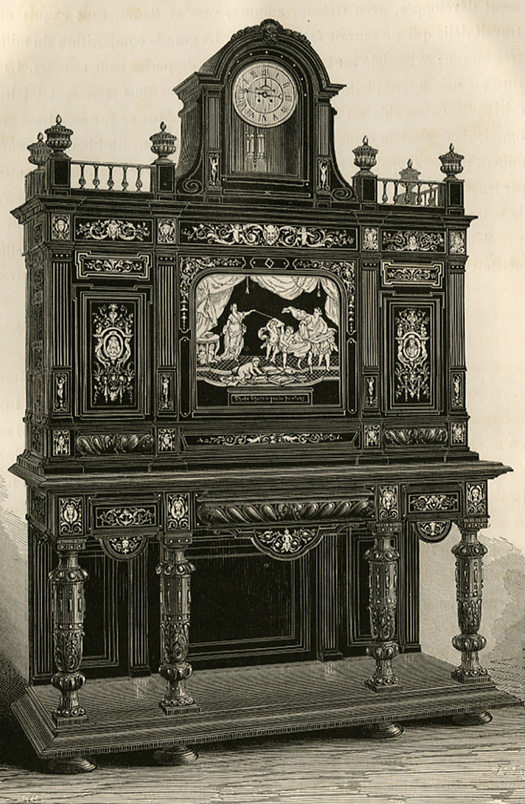
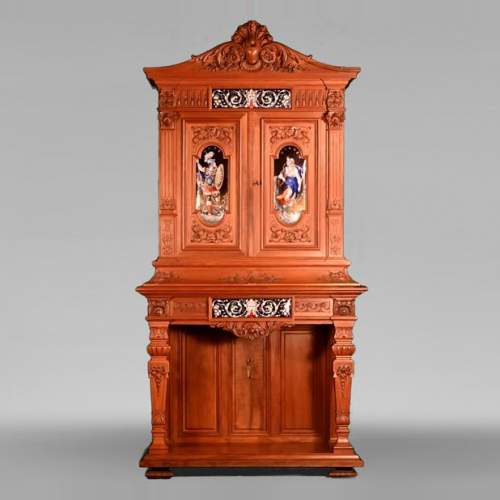
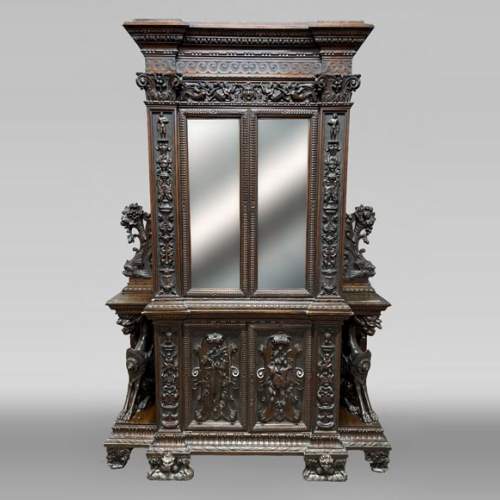
The use of dark wood facilitated the development of this style. Cabinetmakers worked on huge walnut and oak wood cabinets.
The cabinetmakers were fascinated by the very architectural structure of Renaissance furniture. Cabinets and furniture made up of “two bodies” (meaning of the French name for these cabinets) were the pretext for more complex pieces of furniture, and the elegant iconography of the furniture perfectly agreed with the taste of the Second Empire.
The decorator Michel Joseph Napoléon Liénard (1810-1870) contributed to the spread of the Neo-Renaissance style : with ornaments deriving from the 16th century, cartouches, intertwining features, excessive mouldings, eternal chimeras, caryatid , putti, satire, rosary beads and shells, grimacing figures... He worked with the architect Duban in restoring the following castles, Amboise, Versailles Palace , Blois, as well as the chapel at Dreux, which ensured him a sureness of hand and a high level of knowledge about former styles, especiallly the Renaissance style. He created the models of the sculptures on the Saint Michel fountain in Paris. From 1835 to 1865, Liénard played an important role in the Neo-Renaissance style, and is the creator of all sorts of Neo-Renaissance style models.
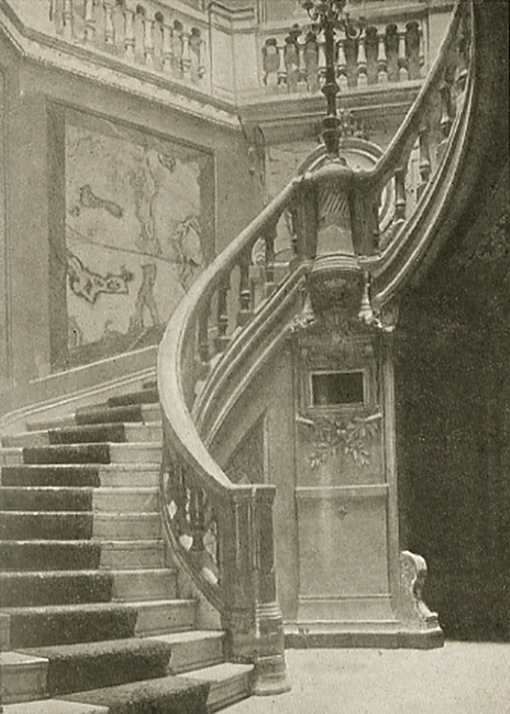
The architect Pierre Manguin made an elegant décor following the French Renaissance style, his inspiration deriving mainly from the Fontainebleau school, for the Marquise de Païva hotel (1819-1884) on the Champs-Elysées. The hotel is decorated with paintings by Gérome and Baudry, sculptures by Aubé, Barrias, Carrier-Belleuse, Dalou. The hotel held great events, in which some of the guests included, Émile de Girardin, Émile Augier, les Goncourt, Edmond About, Delacroix, Théophile Gautier, Arsène Houssaye, Taine, Sainte-Beuve and Gambetta. The doors made out of carved bronze were made by the sculptor Legrain; in the inside, the famous staircase made out of moulded and carved Onyx marble is typical of the Napoléon III style.
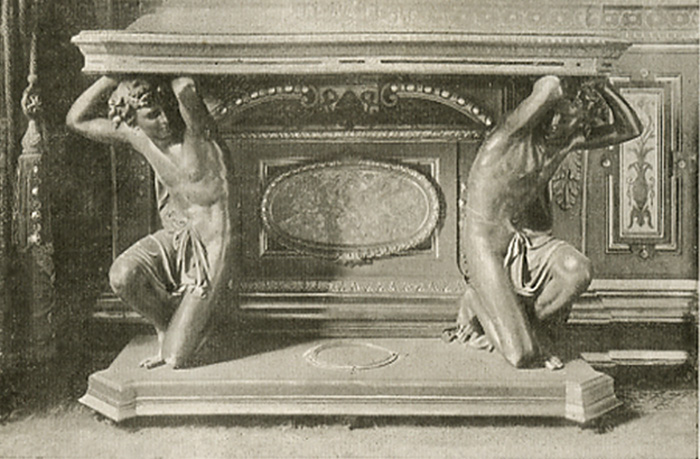
Today the Musée d'Orsay in Paris conserves the famous consoles shaped as atlantes which fitted perfectely with the décor of the salon. It is entirely made out of marble and bronze. The atlantes shaped consoles, are inspired by Italian models of the 17th century, the result of a collaboration between Carrier-Belle and his pupil Dalou.
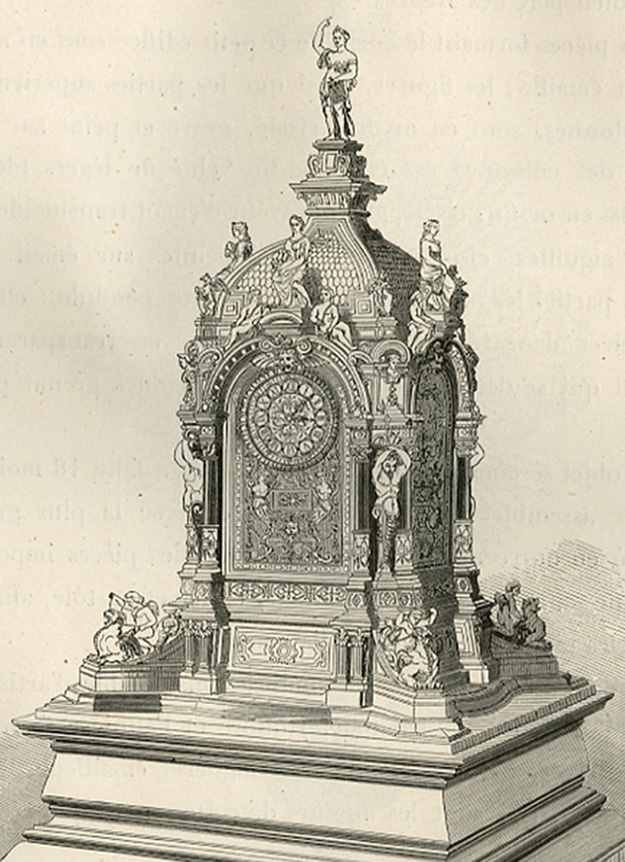
- photo 1 : Renaissance style pendulum by Baugrand, World's Fair of 1867 . Baugrand, jeweller for Emperor Napoléon III presented this remarkable pendulum made out of gilded silver, chiseled, engraved, and enameled, fine gold and coated in enamel, lapis-lazuli, and rock crystal.
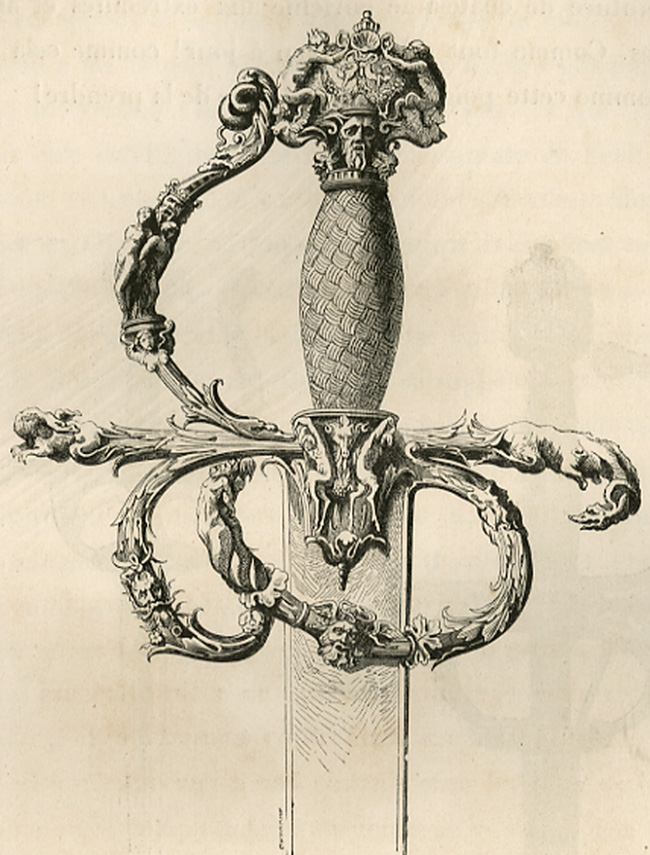
- photo 2 : Renaissance sword from the elaborate and famous collection of M. le comte de Nieuwerkerke, presented at the World's Fair of 1867 .
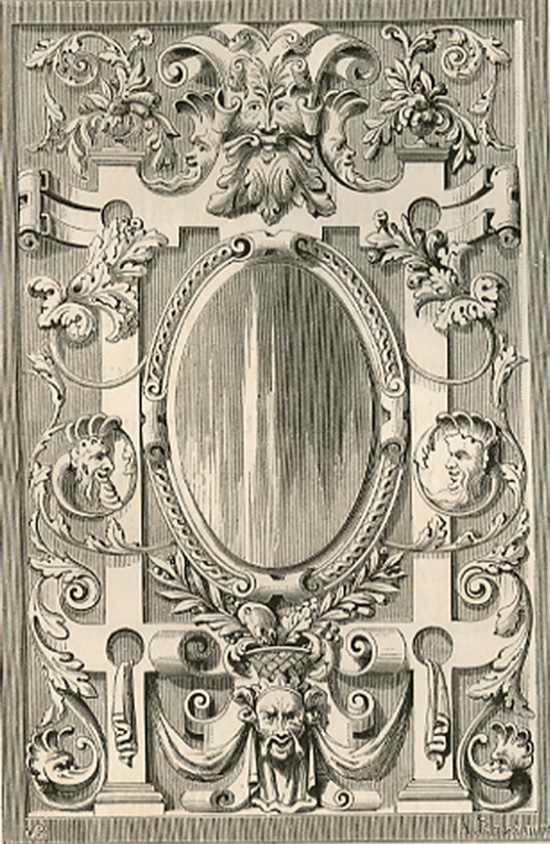
- photo 3 : Henri II style mirror by Mr Bodart, World's Fair of 1867 . The work of Bodart was highly valued because he perfectly mastered the art of metalwork, procedure which consisted of hammering the cast iron allowed him to obtain beautiful features in the cast iron, volutes, corbels, mascaroons, windings and grotesque features.
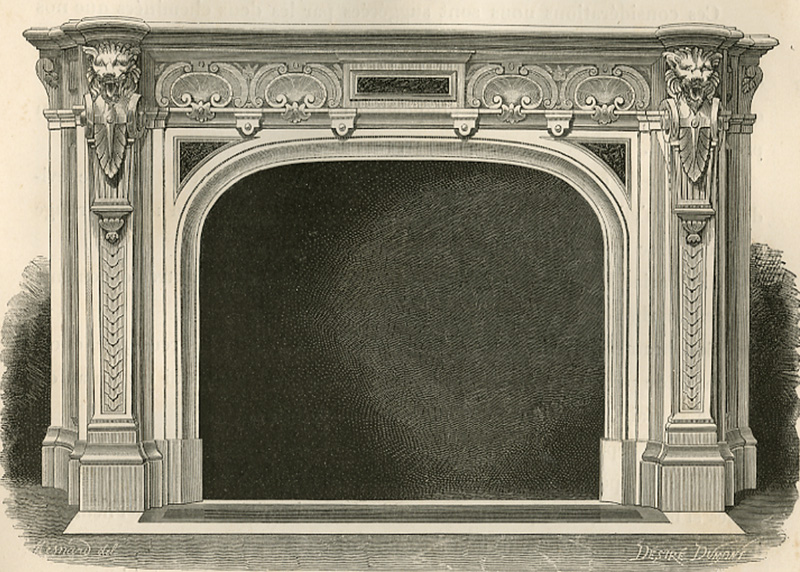
- photo 4 : Renaissance style fireplace in black marble, by Mr Parfornry and Mr Lemaire which received a gold medal from the marble industry and the World's Fair of 1867 .
- photo 5 : Piece of ebony furniture, encrusted in ivory, Renaissance style, by Hunsinger, World's Fair of 1867 .
- photo 6 : Atlantes shaped console from the Marquise de Païva hotel, kept today at the musée d'Orsay in Paris.
- photo 7 : The large Onyx staircase, hôtel de la Marquise de la Païva, Paris.