Regence
Download PDF
In the first decade of 18th century, furniture shapes are bent and the decorative arts soften while the Sun King (Louis XIV) is fading. This transformation of the taste goes on when Louis XIV dies in 1715 and until his heir comes of age in 1723, while the Regency is insured by Duke Philip of Orleans. After the Regency, which is considered as a transitory time for taste, the Louis XV style will be distinguished by its fantasy and asymmetries.
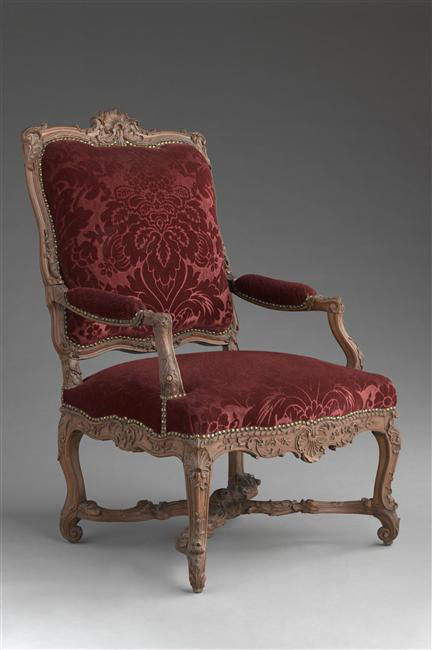
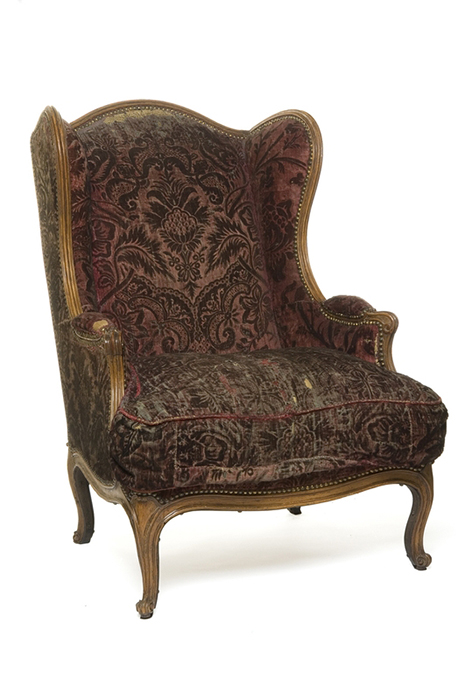
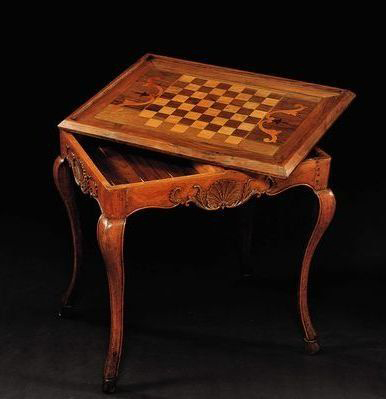
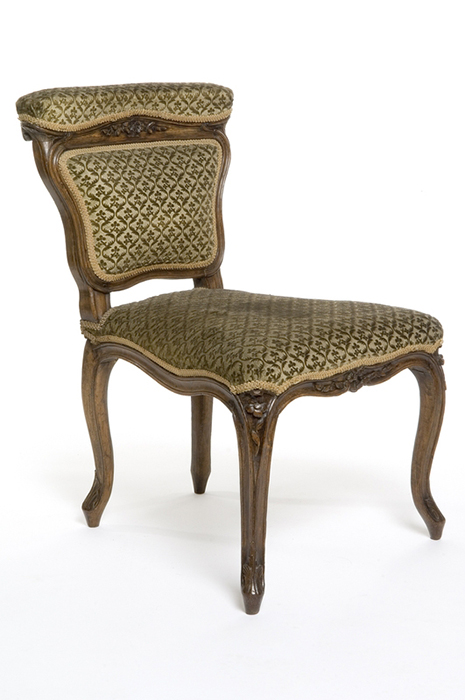
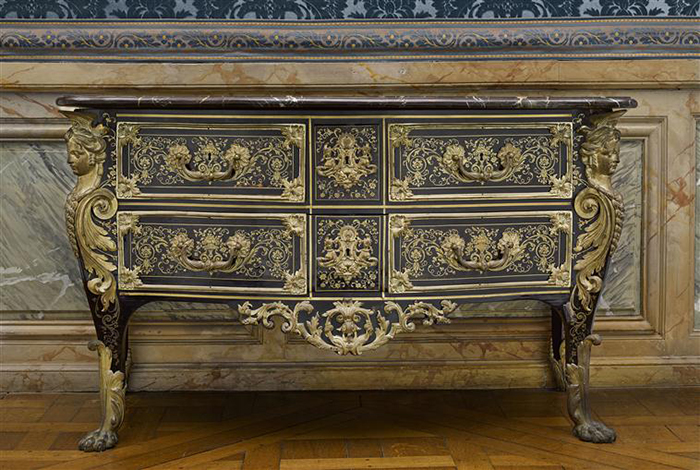
In these wavering times, the Court in Versailles Palace no longer sets the pace of fashion, and the aristocracy in the capital is the only master of vogue. It privileges an intimate and feminine atmosphere which declines in furniture, mellowed and suitable to sociable evenings: armrests are stuffed and set back in order to receive the “panniers” of dresses, the “Bergères” armchairs are provided with wings, chairs tend to get rid of the crosspieces. Playing tables are increasing as well as “ponteuses” chairs, allowing to sit astride and follow a conversation or a game. These furniture pieces are designed for the literary Salons receiving intellectuals, philosophers, writers and artists. The toilet tables appear in this ladylike time, as well as the bulging “tombeau” chest of drawers, with its “crossbow” swaying profile.
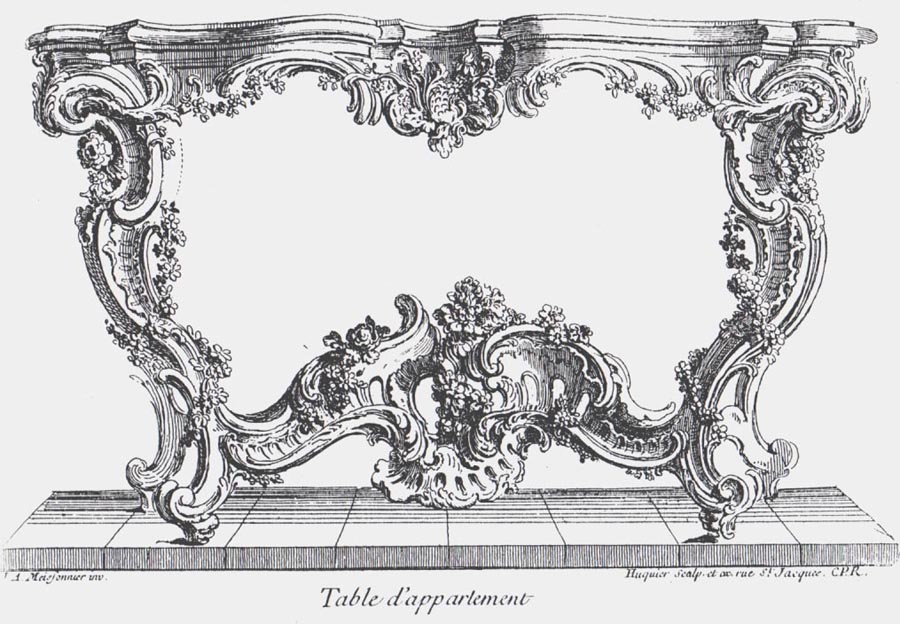
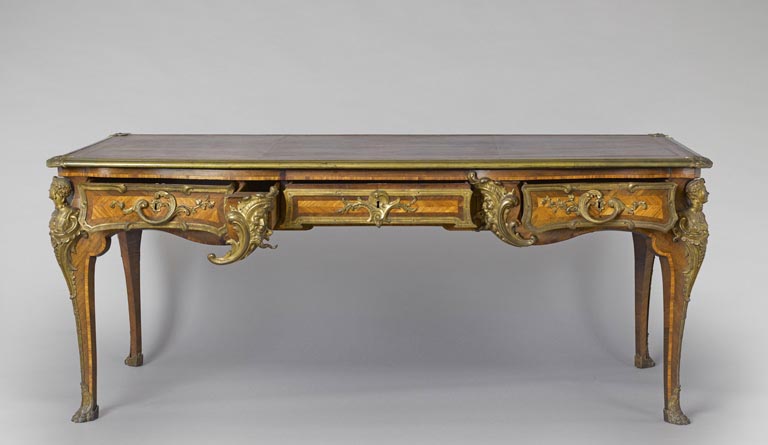
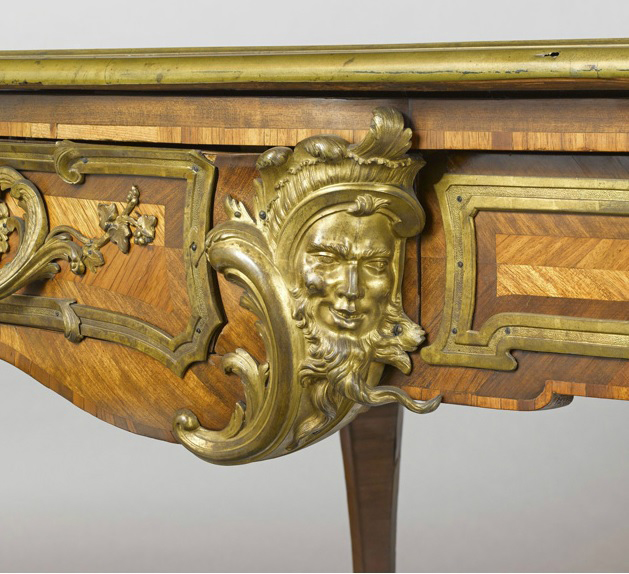
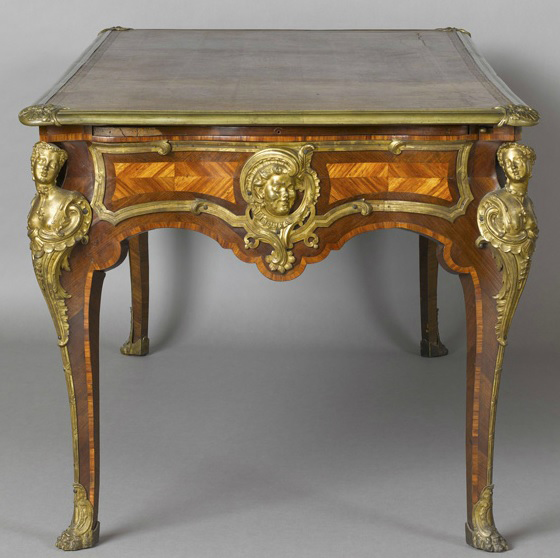
Marked by a wind of freedom and gallantry, the Regence style thus keeps, between 1700 and 1730 approximately, the vocabulary of the Louis XIV style and preserves its symmetry, while it curves the lines and brings new thin sculpted motifs. From this union between curves and symmetry results a softness preserving great harmony. The designers Oppenord, a pioneer, and then Meissonier and Pinault, creators of Rococo, dominate the period. Let us quote among the most fashionable motifs: shells, Acanthus leaves, palms, curved foliage, bearded or women heads, flowers, rocks, fruits; associated by contrast with geometrical backgrounds – especially in marquetry works – privileging squares and diamonds. The chinoiseries that will be distinctive of 18th century are also increasing : pagodas, monkeys, peacocks… To Louis XIV style ’s heroism and solemnity succeeds the stressing of sociability, playing and the aristocratic spirit.
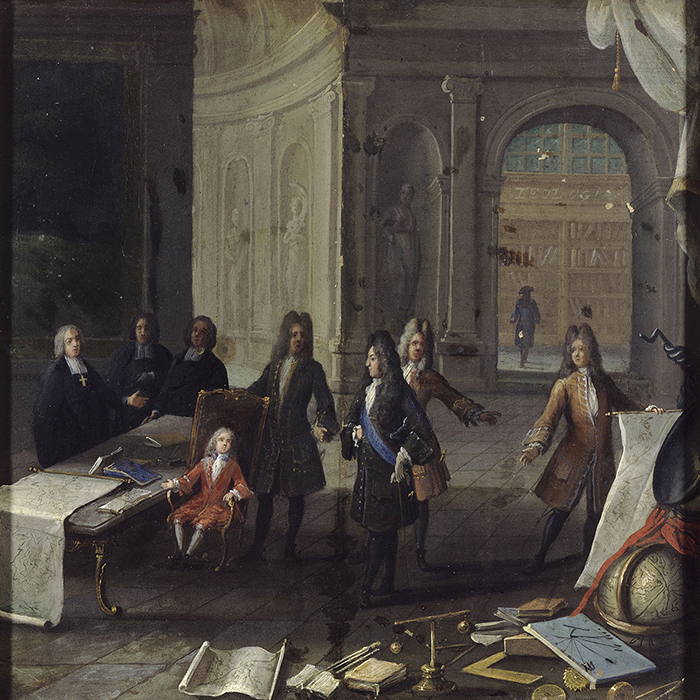
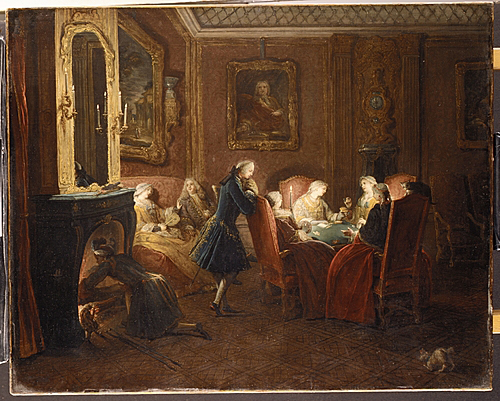
Emblematic among all, the shell, surrounded by volutes or foliage, spreads on chairs and armchairs, paneling, fireplaces, brackets and drawers. These elements are seen on fireplaces, more curved, decorated with shells and whose overmantel prefers now mirrors to stone, as one can see in a genre scene painted by Dumesnil.
It is the admirable work of Charles Cressent that sets the tone of the Regence style : wood worker and sculptor, he creates a sophisticated decorative vocabulary, modeling his own bronzes and using subtle wood species. He notably borrows to the illustrious Antoine Watteau the spirit of his compositions, and his silhouettes of women from which he designs the “espagnolette”, a woman bronze bust to decorate furniture.
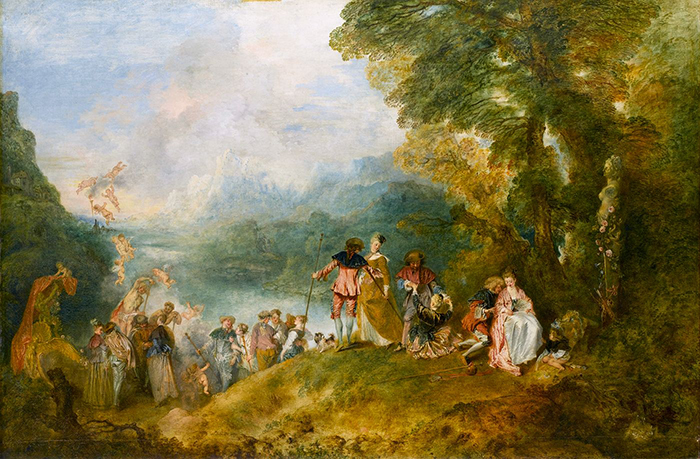
In short, the spirit of the Regency is illustrated in 1717 by the prize awarded to the Pilgrimage to the Isle of Cythera by Watteau. It immediately claimed its taste for gallantry, curves and fantasy; one can even find in this painting the shell decorating Venus’ chariot.
In 1830, the Rococo style fascinates Théophile Gautier, a major critique, who advocates its fantasy and playfulness. In 19th century, numerous mansions and castles provide themselves with Regence furniture, thanks to 19th century fabrication of furniture and bronzes by Beurdeley and H. Dasson.
Bibliography
- Émile Bayard, Art de reconnaître les styles. Les styles Régence et Louis XV, 1919.