Art Nouveau
Download PDFSymbol of 1900 sweet life, the Art Nouveau (c. 1890-1914) results from the genius of young artists, eager to get rid of traditional forms, and open the way to a new world, turned to nature and its symbols. The British William Morris and John Ruskin had announced this artistic revolution, advocating natural and refined motifs in decorative arts, and inspiring the Arts & Crafts movement.
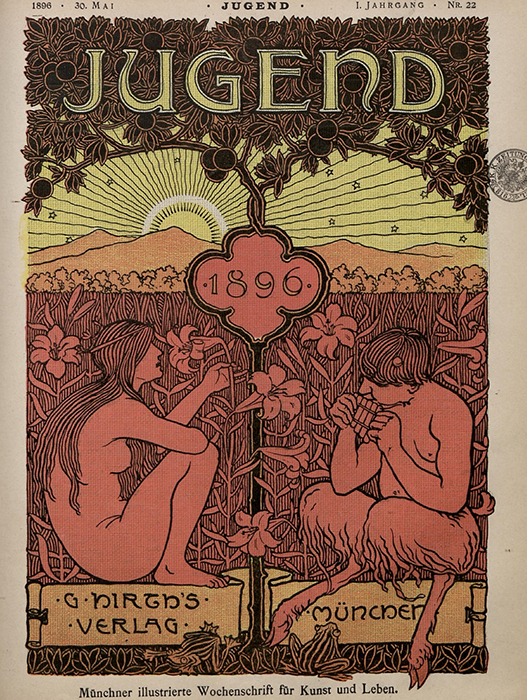
It is about not less than entirely transforming the modern man’s lifestyle, by unifying life and art in a total art, touching everything visible. The Art Nouveau, to achieve this project, has thus been deliberately turned towards the decorative arts, architecture and home decoration. Spreading at the same time all over Europe, Art Nouveau becomes Jugendstil en Germany, Secession in Vienna, Modernismo in Spain or even Stile Liberty in Italy, as many equivalents to the french experiences. These different movements communicate and back each other through the new phenomenon of illustrated art magazines. Brussels and Paris are in tight connexion, and this is how appears for the first time in Belgium the phrase « Art Nouveau », in 1894 written by Edmond Picard, and becomes right after that the name of Samuel Bing’s Parisian gallery in 1895, L’Art Nouveau.
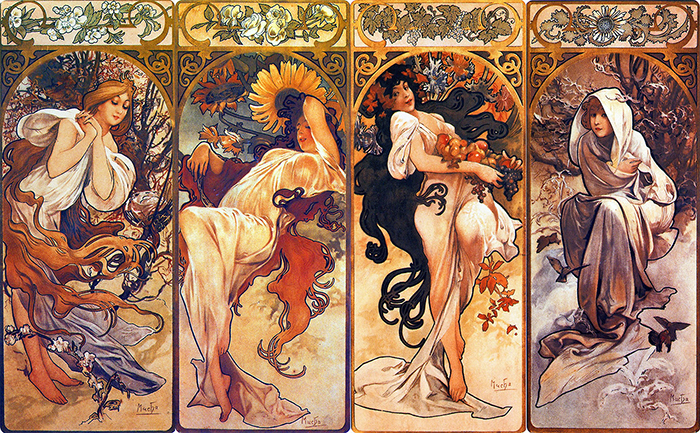
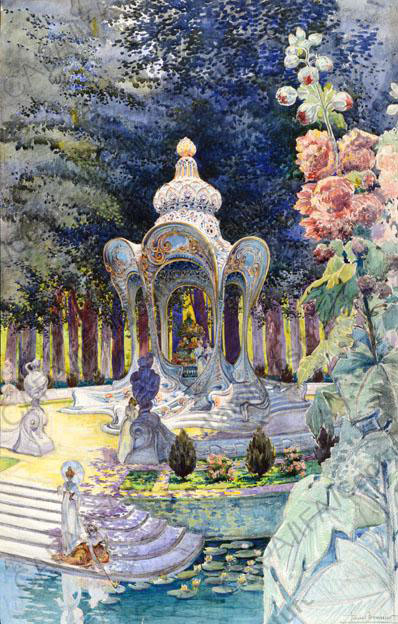
With many connections with symbolism, the Art Nouveau is marked by subtle swaying lines, enticing arabesques, curls reminding smoke or leaves, as well as feminine sensuality. This movement restyles Baroque and Rococo to draw their extravagances and fantasy, while Japonism brings its refined lines in particular. Artists free their imagination and develop personal styles, for the entire movement is devoted to liberation of forms.
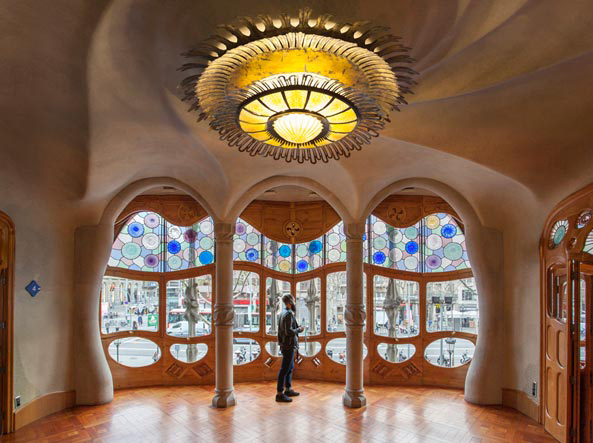
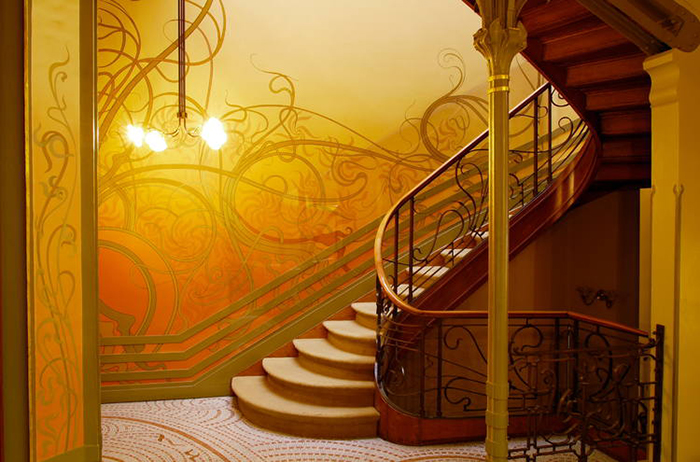
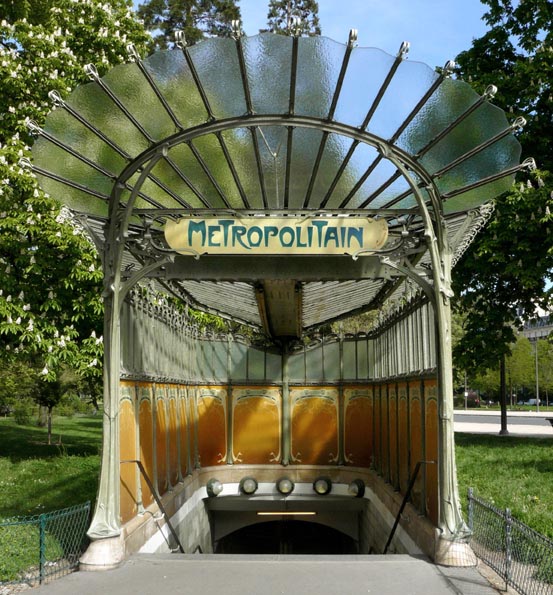
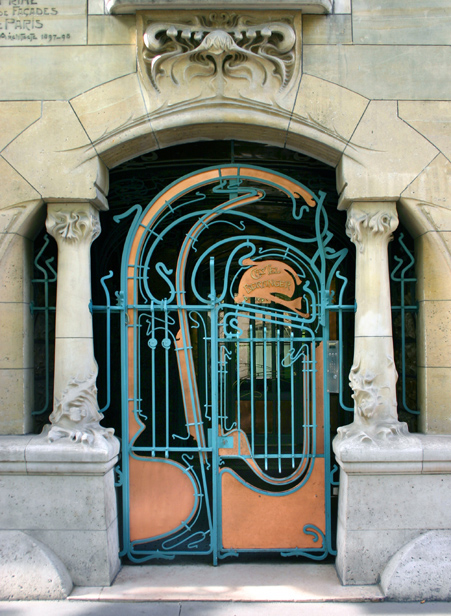
Architects design their creations as environments : furniture, decoration, stained glass windows are integrated in the walls, the fronts are full of life. The magnificent Hôtel Tassel of Brussels (1893), designed by Victor Horta with its decorative ironwork and winding handrail, is considered to be the first building typical of the style. The Grands Magasins, like the Galeries Lafayette in 1900, contribute to accustom people to this Art Nouveau that had been very shocking at first, meanwhile Hector Guimard designs the famous organic-like Parisian subway stations entrances.
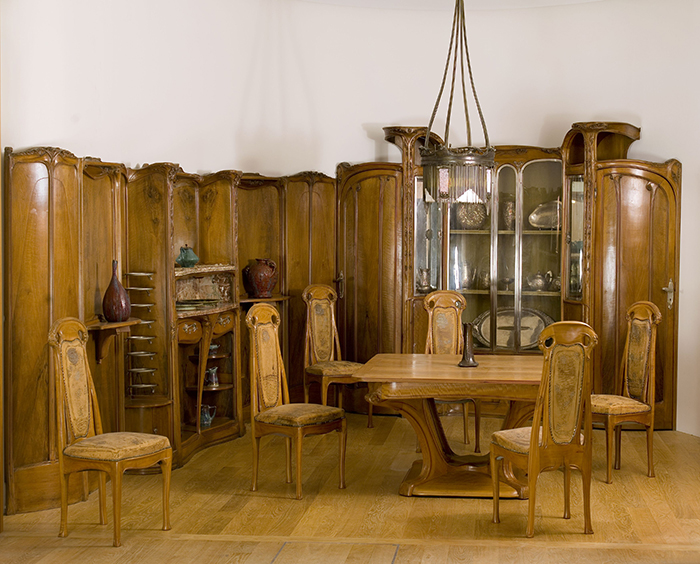
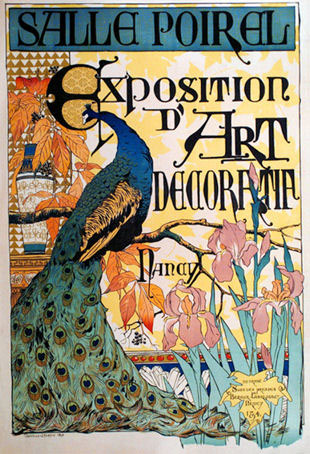
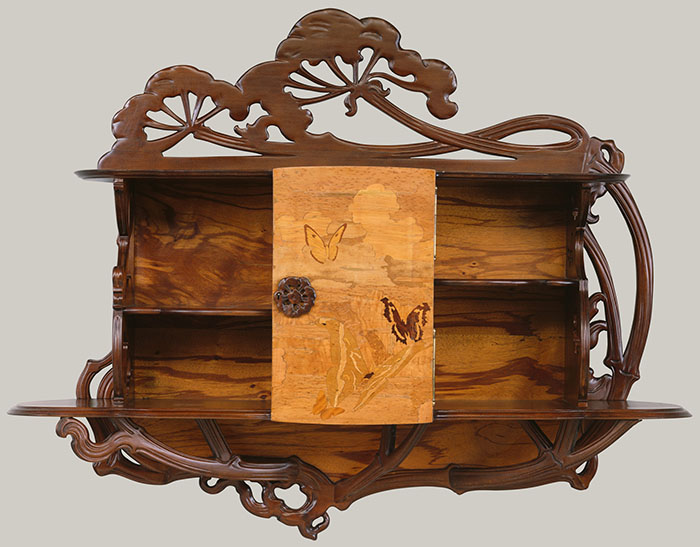
Furniture gives pride of place to the artist’s imagination and takes mechanization away, giving birth to designs beyond compare. Home decoration was truly revolutionized by this new movement : the walls, furniture, fireplaces are all brought to life by swaying and sculptural forms. The line takes priority over volumes, giving the productions a very graphic aspect. To complete this visual world, graphic arts are affected as well by Art Nouveau, which refined lines are found in the remarkable posters by Jules Chéret, Steinlen or Alphons Mucha, and new styled typography such as George Auriol’s.
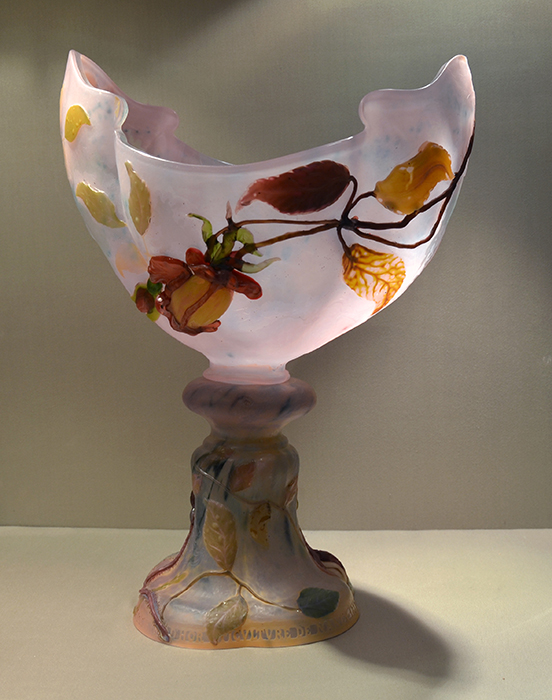
In 1900, two fertile art centers highlighted by the Universal Exhibition of 1900 , Paris and Nancy, develop their own works in parallel. In Nancy, the famous Émile Gallé (1846-1904) stimulates the creativity of city’s glass makers, the Daum brothers, Louis Majorelle, Eugène Vallin and Victor Prouvé. This is where new fabrication methods are finalized : vitrification, application of embossed motifs, dividing marquetry, enameling, acid engraving, patina, or stone-like glass. Émile Gallé, a many skilled artist, is the master of this style, drawing his inspiration in the curved lines of Japanese prints, in the rhythm of their composition, the contrast between empty and full shapes, and color swathes. Fond of natural sciences, Emile Gallé’s decorations are invaded by styled shells, seaweeds, butterflies, dragonflies, flowers. As soon as 1884, he opens a cabinetmaker workshop dedicated to this work, while Louis Majorelle’s Water Lilies Set, or Ombellifères Set have a huge success.
Let us add that Art Deco style , generally mistaken for Art Nouveau, appeared in reaction to it, and in opposition with natural esthetics. Art Deco, art of the « roaring 20’s », will encourage straight lines, mechanization and an industrial esthetic.