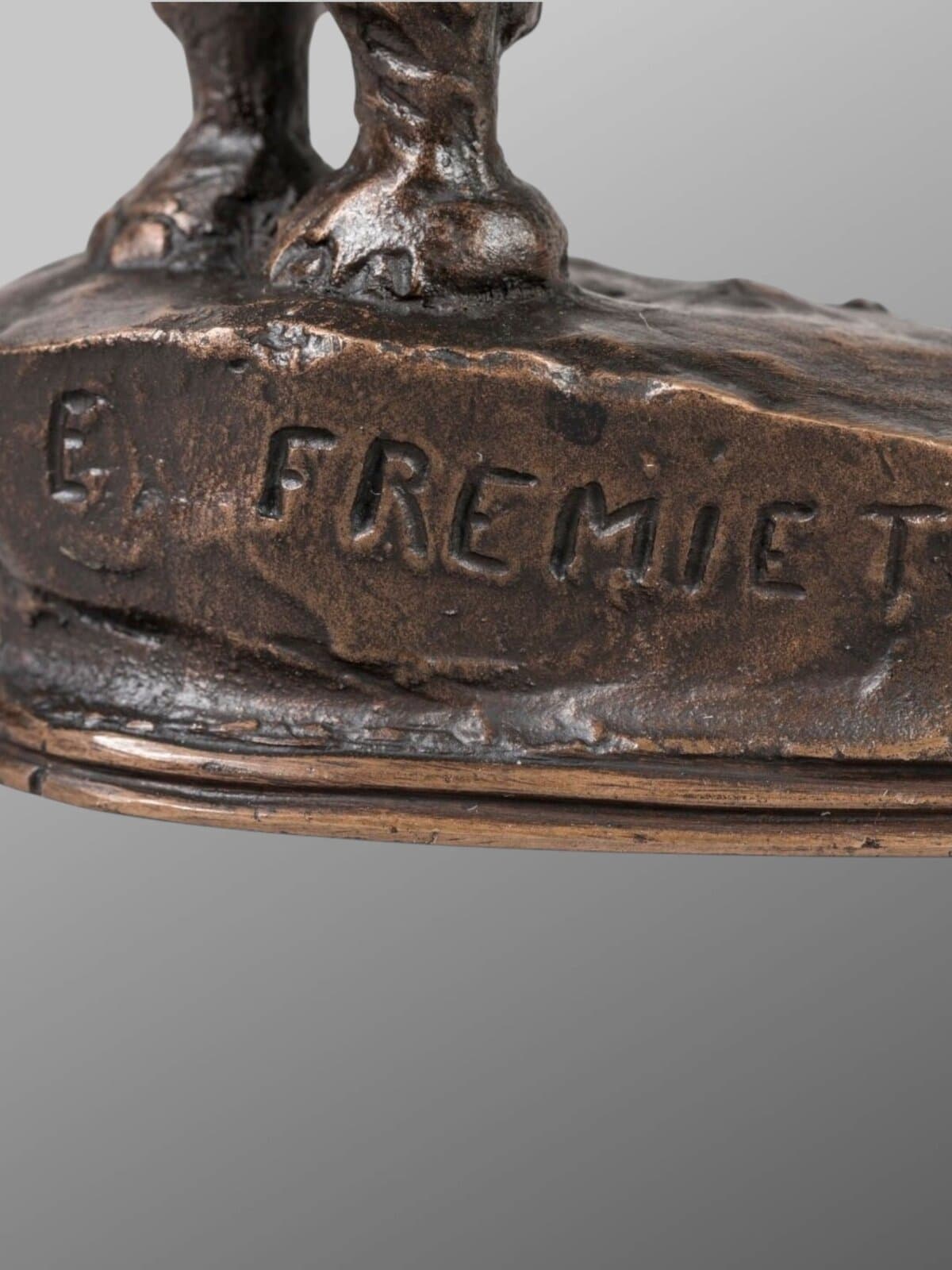
Emmanuel Frémiet (1824-1910)
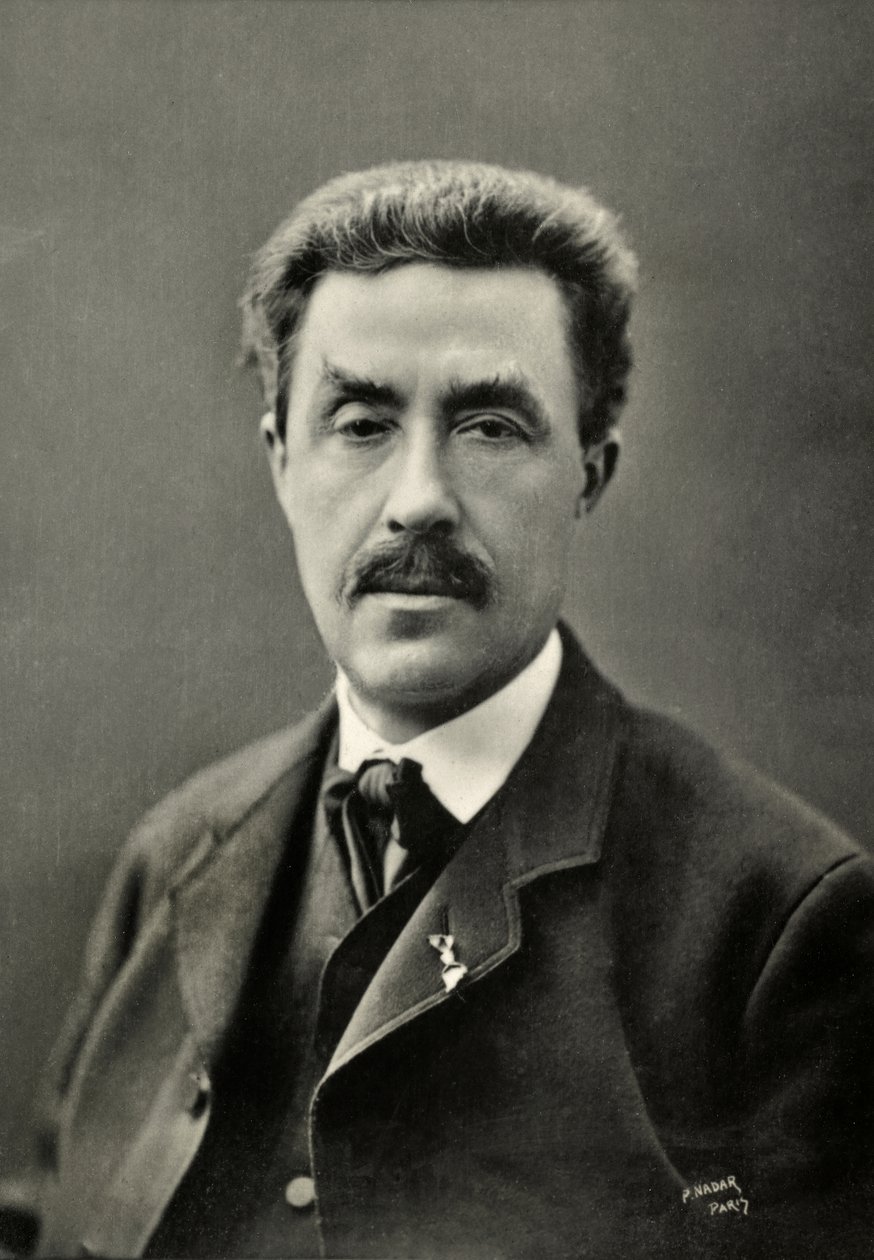
Download PDFEmmanuel Frémiet, born in Paris on 6 December 1824 and died in Paris on 10 September 1910, is one of the great animal sculptors of the 19th century. Nephew and pupil of François Rude, he made his name both through his animal bronzes, observed with almost scientific precision, and through famous equestrian monuments, including the Joan of Arc in the Place des Pyramides in Paris.
Training outside the École des Beaux-Arts
Frémiet did not follow the teaching of the École des Beaux-Arts. He trained at the Petite École, the special drawing school, then in the studio of his uncle Rude, alongside his aunt, the sculptor Sophie Frémiet. Before turning to sculpture he worked as a moulder at the École de Médecine, an experience that fed his taste for anatomy. He exhibited at the Salon from 1843 and remained present there until 1908.
Early work: animals from life
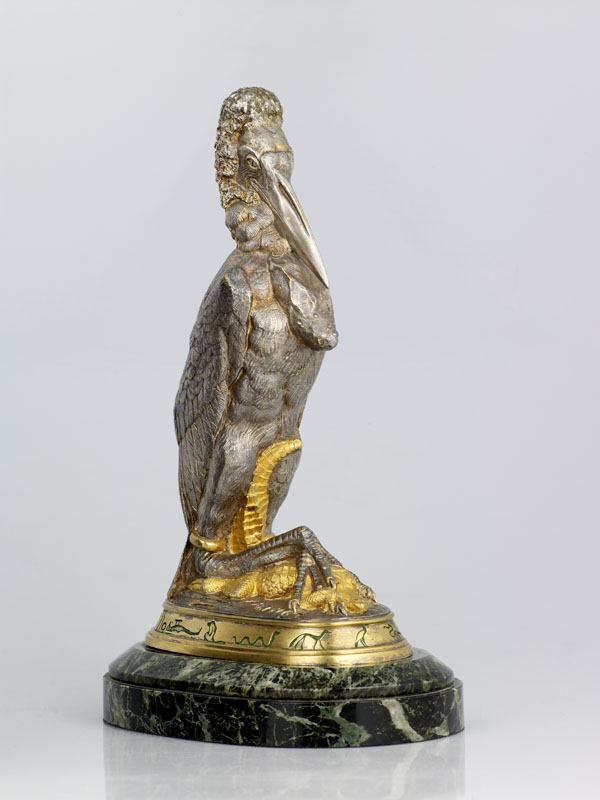
His Marabout Holding a Caiman in its Claws (1850), a model commissioned in 1849 and shown at the Salon of 1850, was his first commission: four bronze groups were to support a porphyry table in the Egyptian museum of the Louvre. A specialist in the domestic animal, observed in daily life, he attracted the attention of critics, Baudelaire among them, and was recognised for his studies of horses. The museums of Dijon and the Musée d'Orsay hold several of these early models.
Gorillas, horses and monuments
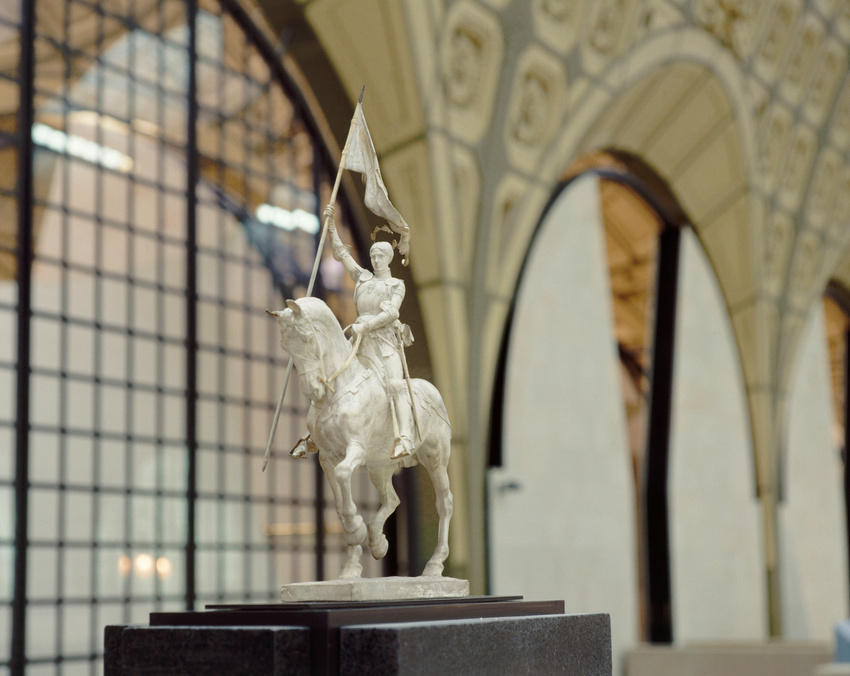
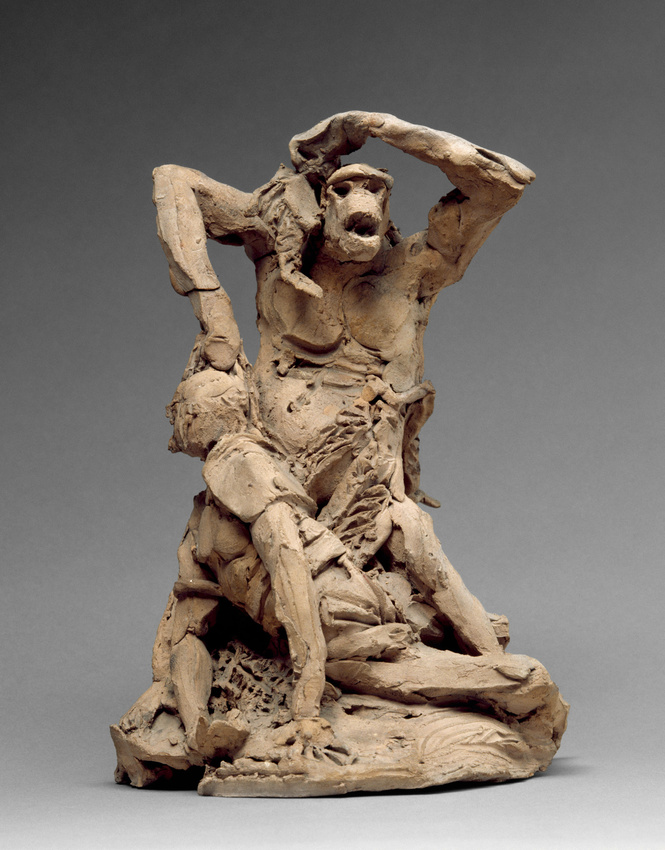
Frémiet renewed the animal repertoire by opening it to big cats and apes: his Retiarius and Gorilla (about 1859), at the Musée d'Orsay, foreshadows the famous gorilla carrying off a woman, which earned him a medal of honour at the Salon of 1887. He went on to create major monuments: the equestrian statues of Napoleon I and Louis d'Orléans (Château de Pierrefonds), the gilded Joan of Arc in the Place des Pyramides (model of 1874, with replicas abroad), an equestrian Velázquez for the Jardin de l'Infante at the Louvre, and the St Michael crowning the church of the same name. The Musée d'Orsay holds a plaster reduction of his first model for Joan of Arc, dated between 1872 and 1874.
An official career
Frémiet succeeded Barye as professor at the Muséum d'histoire naturelle. He was made an Officer of the Legion of Honour in 1878 and elected to the Académie des Beaux-Arts in 1892. The Royal Academy in London elected him an honorary member in 1904. He was also the father-in-law of the composer Gabriel Fauré.
Frémiet and the edition bronze
His models, notably animals and riders, were reduced and cast in bronze by the Parisian founders of his day, among them Barbedienne. These editions, signed "Frémiet", spread his work far beyond public monuments.
See also: Antoine-Louis Barye — Christophe Fratin — Ferdinand Barbedienne — Gilt bronze
See our 19th-century sculptures
Bibliography
Institutional sources
Musée d'Orsay, Paris, catalogue of artists and personalities, "Emmanuel Fremiet (1824-1910)"; works: Retiarius and Gorilla (about 1859), Joan of Arc on Horseback (plaster reduction of the first model, 1872-1874, RF 3437), St George Fighting the Dragon (about 1891), Pan and Bear Cubs.
Bibliothèque nationale de France, person record "Frémiet, Emmanuel (1824-1910)" (dates and places of birth and death).
Joconde database (POP, French Ministry of Culture), record for Marabout Holding a Caiman in its Claws, 1850, Musée des beaux-arts de Dijon, inv. 2008-5-1.
Encyclopædia Universalis, entry "Frémiet Emmanuel (1824-1910)".
Royal Academy of Arts, London, entry "Emmanuel Frémiet Hon RA (1824-1910)" (elected honorary member on 27 January 1904).
National Gallery of Art, Washington, entry "Emmanuel Frémiet" (Two Seated Basset Hounds, model of 1853).
Catherine Chevillot, exhibition catalogue Emmanuel Frémiet, 1988 (cited by the Musée d'Orsay record).
Online resources
"Emmanuel Frémiet", Wikipedia (English version).