Guglielmo Pugi (1850-1915)
Download PDFGuglielmo Pugi is one of the most representative sculptors of Florentine decorative statuary at the turn of the nineteenth and twentieth centuries. A master of direct carving in Carrara marble and Volterra alabaster, he ran a family workshop in Florence that worked extensively for export, and above all for the United States. His name denotes both a man and a firm: the one he founded with his two sons and which they continued after him.
From Fiesole to Florence
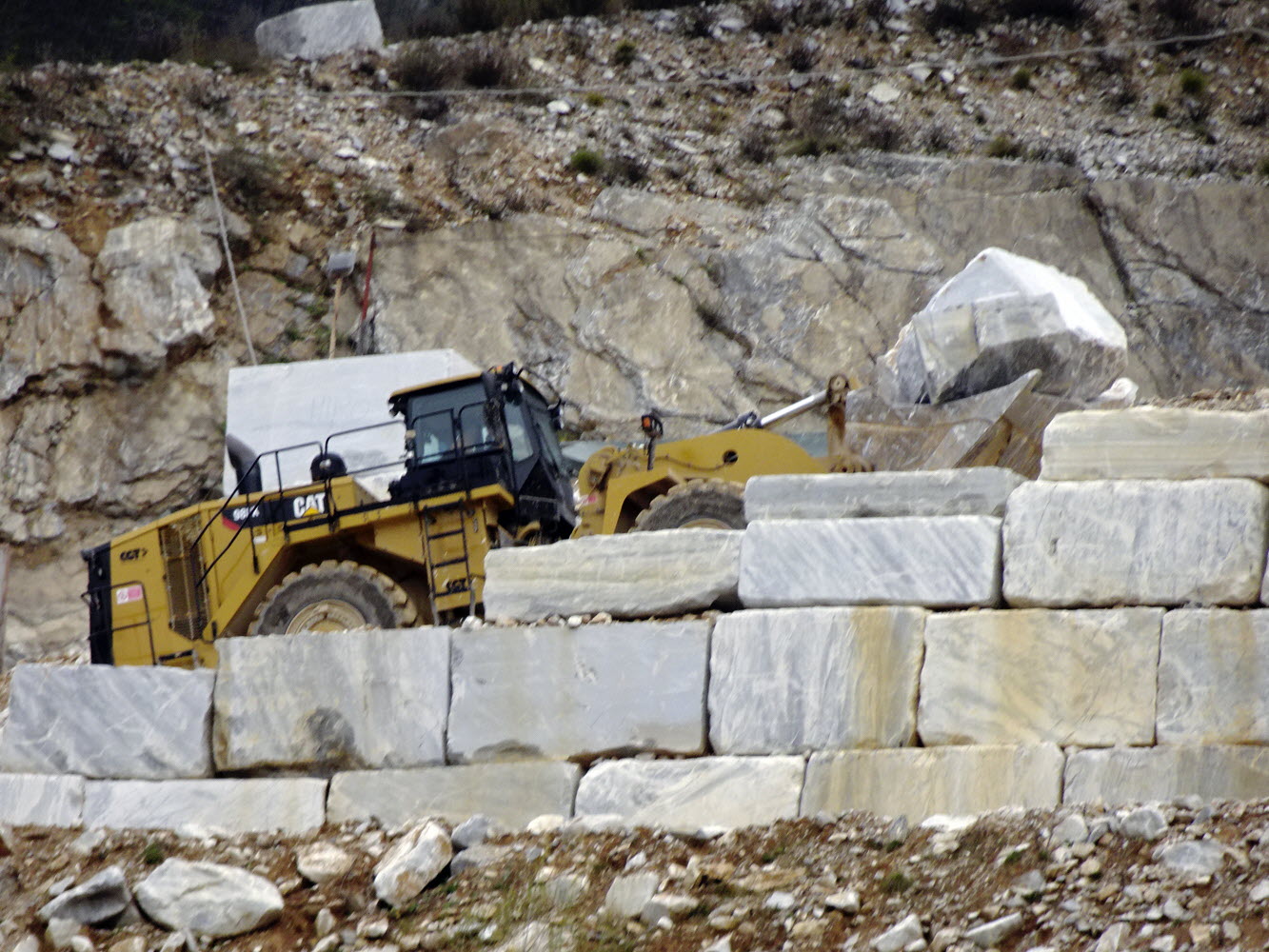
Guglielmo Pugi was born in 1850 at Fiesole, on the hills overlooking Florence. Tuscany was then the heart of a centuries-old marble industry, which drew its material from the quarries of Carrara and its expertise from a tradition of carving unbroken since the Renaissance. From 1870 Pugi settled in Florence, where he would live until his death and where he established his sculpture workshop.
The city was at that time one of the great European centres for the production of decorative statuary. Florentine workshops supplied the houses and gardens of the whole of Europe and, increasingly, of America: busts, allegorical figures, groups after the antique, basins and fountains left the port of Livorno by the shipload. It was within this economy that Pugi's enterprise took shape.
The firm of Guglielmo Pugi e Figli
The workshop was a family affair. Pugi brought in his two sons at an early stage, Gino, born in 1877, and Fiorenzo, born in 1880, under the name "Guglielmo Pugi e Figli". After their father's death in 1915, the two brothers took over and continued the business under the name "Fratelli G. e F. Pugi", also known in English-speaking countries as the Pugi Brothers.
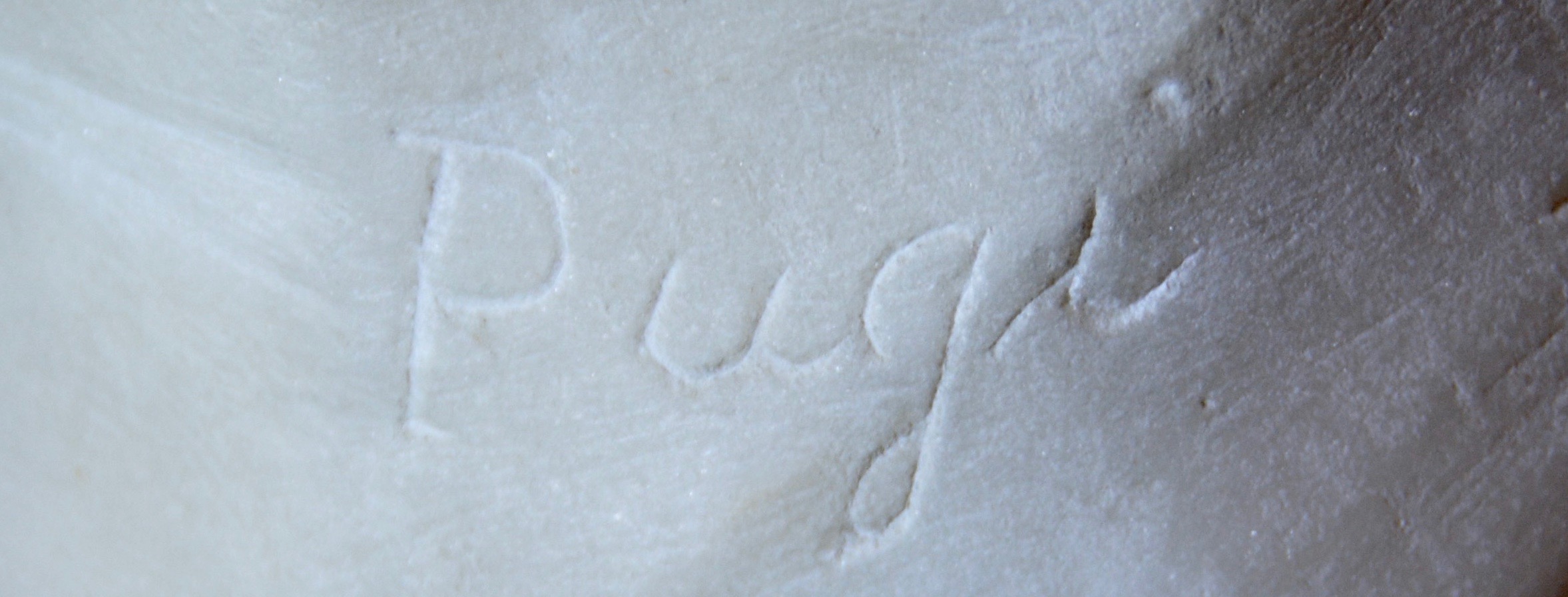
This arrangement explains a particular feature of the works produced by the firm: many are signed with the surname Pugi alone, without a first name. The signature then denotes the workshop as much as the hand of any one sculptor — common practice in the large Florentine studios of the period, where the master conceived the model and execution was shared among several carvers.
Material and manner
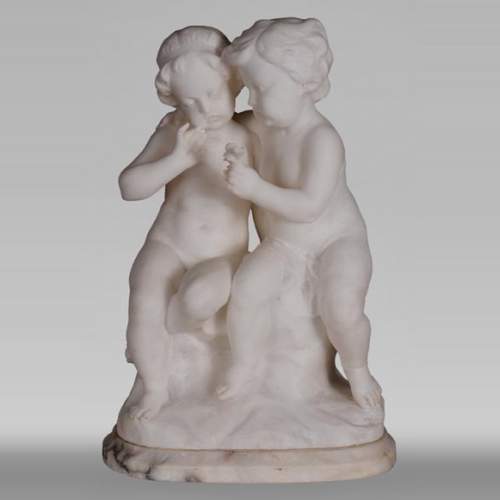
Pugi's work is characterised by direct carving, practised in two materials: Carrara marble, white or veined, and Volterra alabaster, a translucent stone of which Tuscany holds the historic monopoly and which allows effects of light impossible in marble.
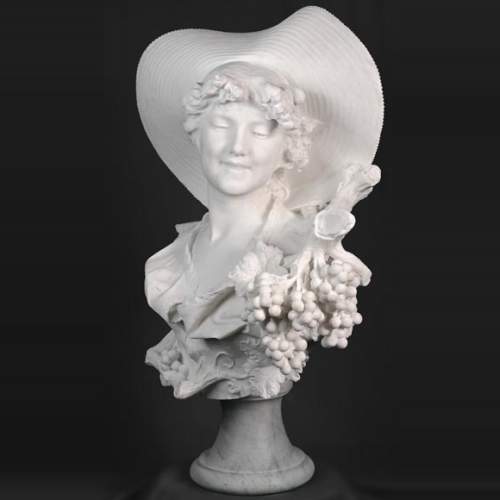
His repertoire is that of the taste of his time. He carved busts of young women, often crowned with flowers or veiled, whose flowing drapery and delicate modelling belong to the Art Nouveau aesthetic; allegorical figures, seasons, muses, personifications of the arts; and compositions after the antique inspired by Greco-Roman statuary, such as busts of Diana and other deities. Animal subjects, by contrast, are rare in his output.
Technical virtuosity is the hallmark of the workshop: fineness of hair, the transparency of veils achieved by thinning the marble, contrast between polished surfaces and areas left rough. This mastery, inherited from the Florentine tradition, is what sets the productions of the Pugi firm apart from ordinary export statuary.
International exhibitions and the American market
The Pugi firm worked above all for export, and particularly for the United States, where the industrial fortunes of the late nineteenth century sustained a considerable demand for European decorative sculpture.
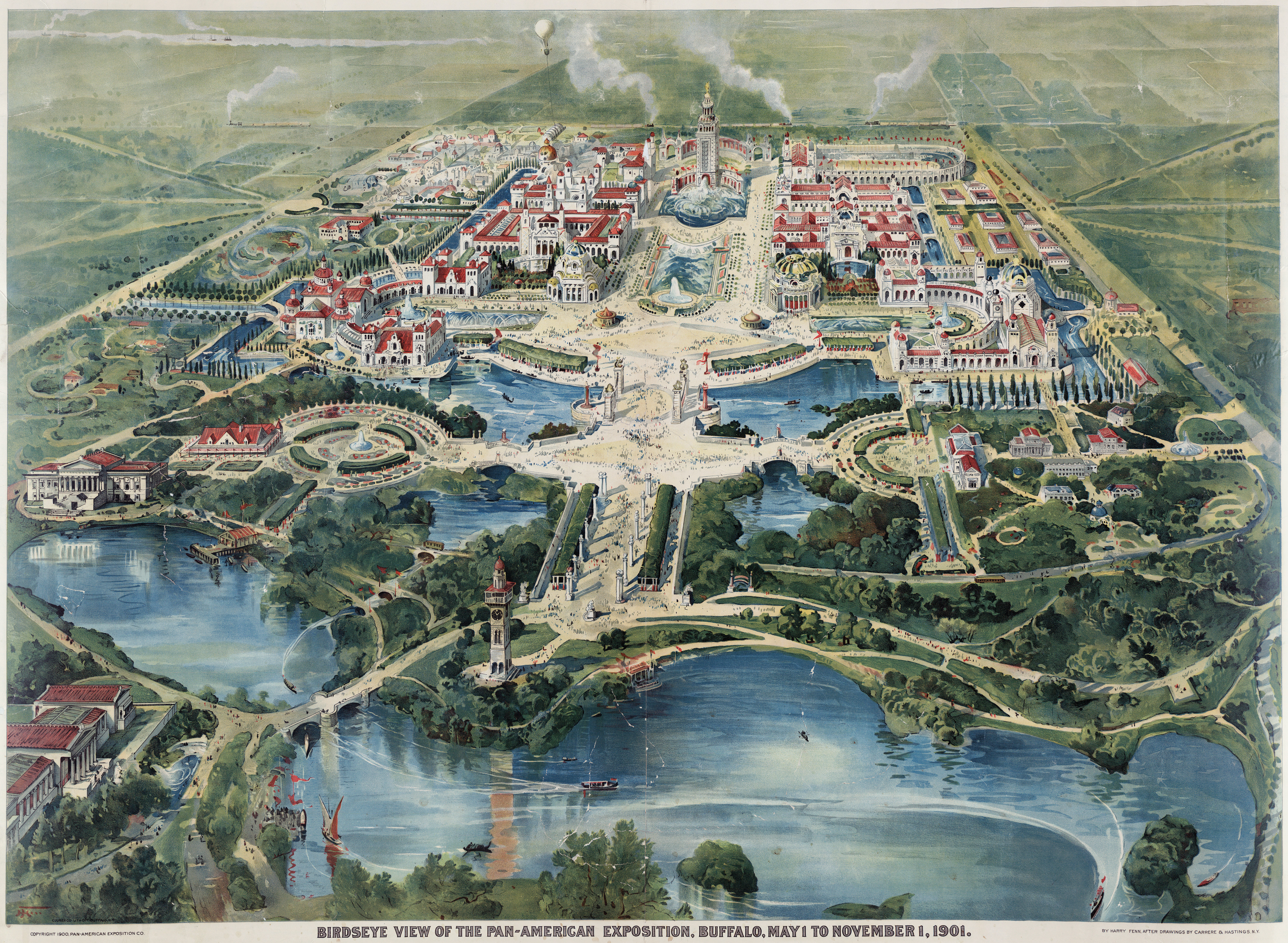
Such clients were won at the great international exhibitions. The workshop was present at the Pan-American Exposition in Buffalo in 1901 — several sculptures from that event still stand in the city's parks today — and then at the St Louis World's Fair of 1904, where the official catalogue records, in the Palace of Manufactures, the "statues, busts and groups in marble" of the Pugi Brothers of Florence.
Works and legacy
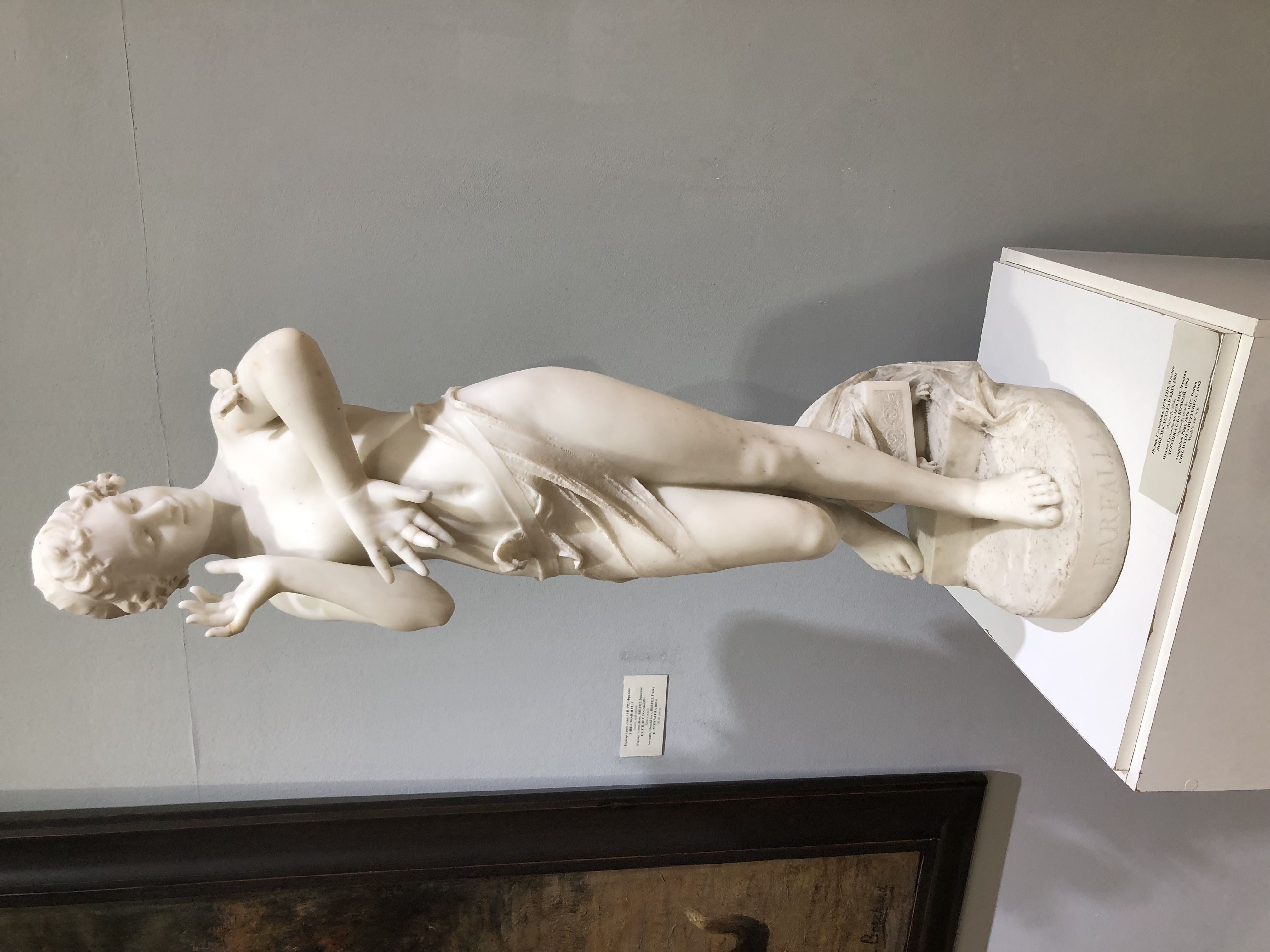
Alongside the production intended for the decorative market, several groups and portraits by Guglielmo Pugi are held in the Museo storico dell'alabastro in Volterra, the museum devoted to the history of Tuscan alabaster. His Girl with a Butterfly, dated 1902, is in the Central State Museum of Kazakhstan in Almaty. His name is recorded in Alfonso Panzetta's Nuovo Dizionario degli Scultori Italiani dell'Ottocento e del primo Novecento, the standard reference work on Italian sculpture of the period.
See also
Art Nouveau — Carrara marble — Statuary marble — Alabaster — Egisto Gajani — The Neoclassical style — The Grand Tour
Bibliography
Primary sources
Official Catalogue of Exhibitors, Universal Exposition, Saint Louis, 1904, St Louis, 1904, p. 131 — listing the "statues, busts and groups in marble" of the Pugi Brothers of Florence in the Palace of Manufactures.
Pan-American Exposition, Buffalo, 1901 — participation of the Pugi workshop; several sculptures from the exhibition can still be seen in the city's parks.
Institutional records and resources
Musée d'Orsay, Paris, directory of artists and figures, entry for "Guglielmo Pugi"; works relating to the artist are held in the museum library (CCBMN catalogue).
Museo storico dell'alabastro, Volterra — collections devoted to the history of Tuscan alabaster, holding several groups and portraits by Guglielmo Pugi.
Works cited
Alfonso PANZETTA, Nuovo Dizionario degli Scultori Italiani dell'Ottocento e del primo Novecento, 3e éd., Turin, Umberto Allemandi & C., 2003, vol. 2, p. 703 et 761.
Girl with a Butterfly, 1902, Central State Museum of Kazakhstan, Almaty.