Victor Horta (1861-1947)
Download PDFVictor Horta (1861-1947)
The inventor of Art Nouveau architecture
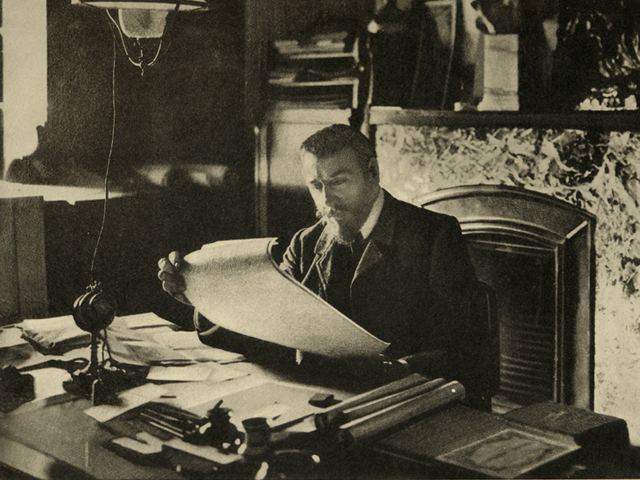
Victor Horta is the father of Art Nouveau architecture. Within a few years, in Brussels, he broke apart the traditional plan of the bourgeois house, used iron and glass as visible elements of the decoration, and imposed the celebrated "whiplash" line drawn from the plant world. Four of his townhouses are today inscribed on the UNESCO World Heritage List. His career nevertheless suffered a brutal eclipse, and several of his major buildings were destroyed: their loss marks one of the turning points in the history of heritage protection.
Training
Victor Horta was born in Ghent on 6 January 1861, into a family of shoemakers. He began with music, which he studied at the conservatory of his native city, before turning to architecture at the Ghent academy of fine arts. In 1878 he left for Paris, where he worked in a decorating studio and discovered both metal architecture and French neoclassicism.
His father's death brought him back to Belgium in 1880. He enrolled at the Académie royale des Beaux-Arts in Brussels, where he became the pupil and then the collaborator of Alphonse Balat, architect to King Leopold II. This association was decisive: Horta worked on the Royal Greenhouses of Laeken, a vast complex of iron and glass that taught him, at full scale, everything a metal structure makes possible. He was awarded the Godecharle Prize in 1884.
His career also owed much to his membership of Freemasonry, which brought him a significant share of his commissions: his first clients, the Université libre de Bruxelles and the Belgian Workers' Party all belonged to that network.
The Hôtel Tassel and the invention of a style
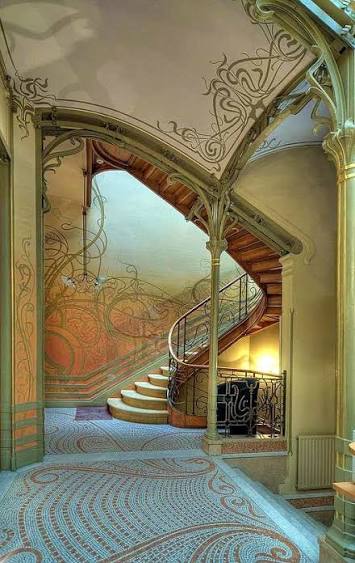
In 1893, Horta completed in Brussels the townhouse built for Émile Tassel, a professor at the Université libre and a friend. The Hôtel Tassel is universally regarded as the first Art Nouveau building in the world.
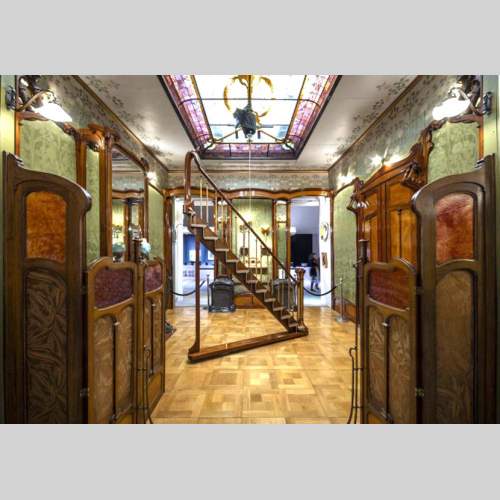
Everything in it was new. Horta abandoned the traditional Brussels plan, organised around a long corridor, in favour of an open space articulated around a central hall lit by a glazed roof. He left the iron structure exposed, columns and beams becoming elements of the decoration instead of being concealed. He ran the whiplash line, a taut curve of plant inspiration, through every surface, from the floor mosaics to the wall paintings, from the stair rails to the ironwork. And he applied his principle of the "portrait": the house must be conceived for its occupant and resemble him.
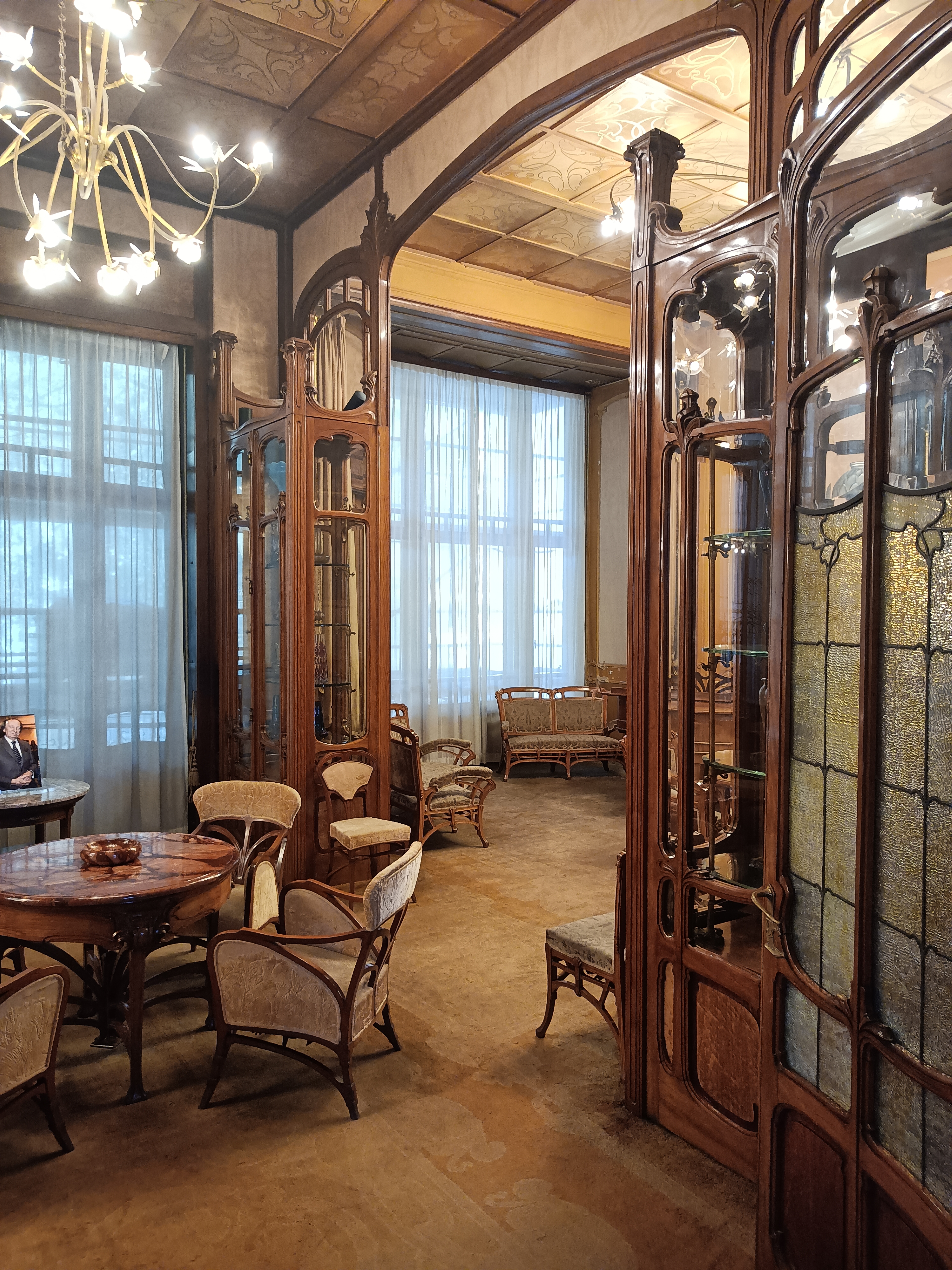
Horta designed everything, down to the door handles, the doorbells and the carpets. This total conception of the building, in which the architect controlled the whole of the decoration and the furniture, would become his signature.
The great townhouses
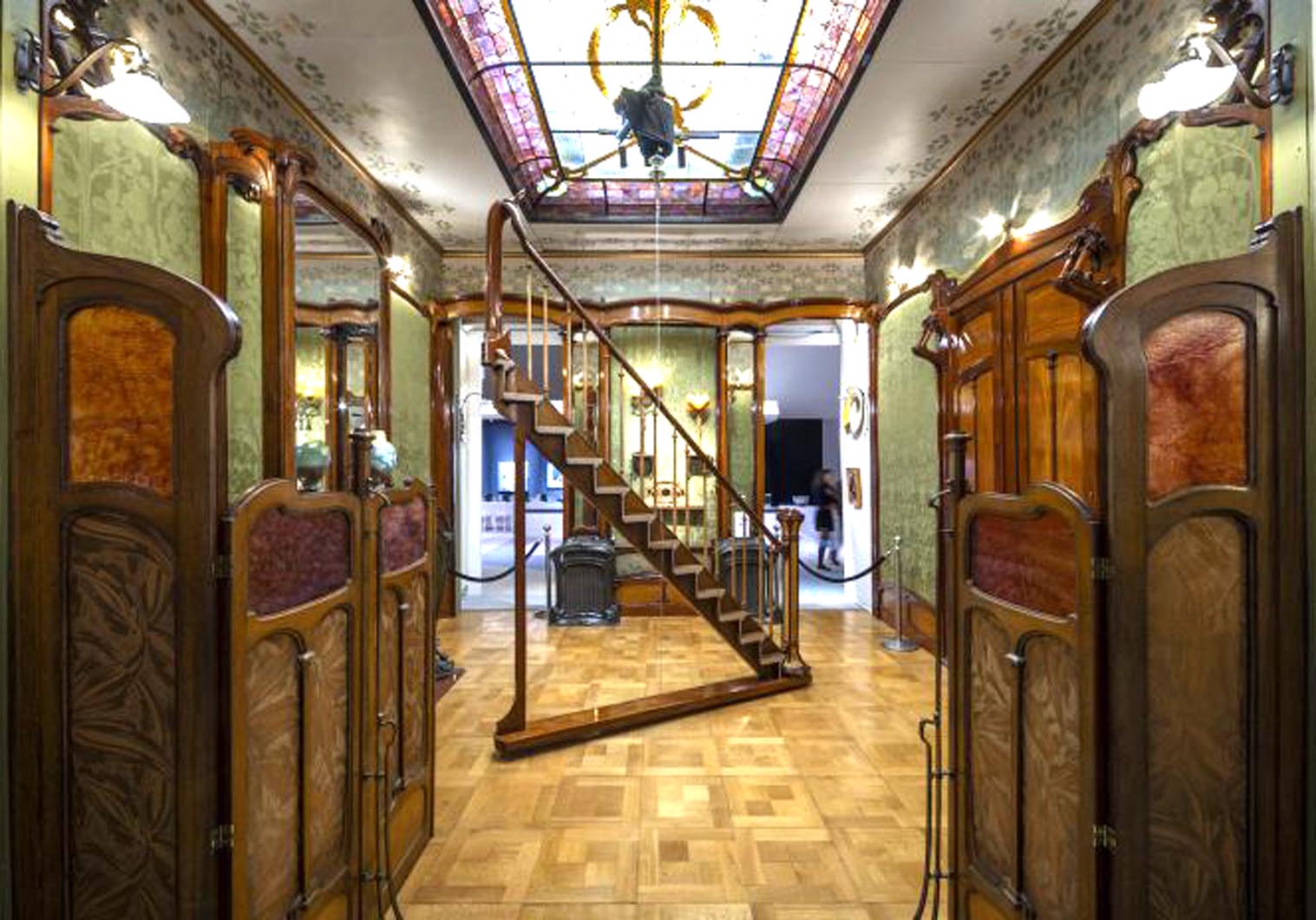
Success was immediate. Through Tassel, Horta met the engineer Charles Lefébure, secretary to Ernest Solvay, the king of industrial soda. The Solvay family entrusted him with several projects, among them the Hôtel Solvay on the avenue Louise (1894-1898), for which he was given almost complete freedom. There he used onyx, marble, bronze and exotic woods, and collaborated with the painter Théo van Rysselberghe on the grand staircase.
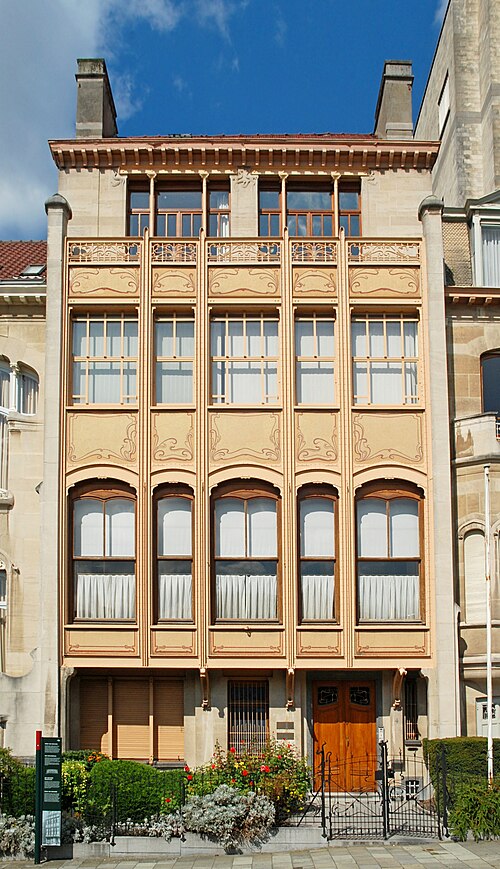
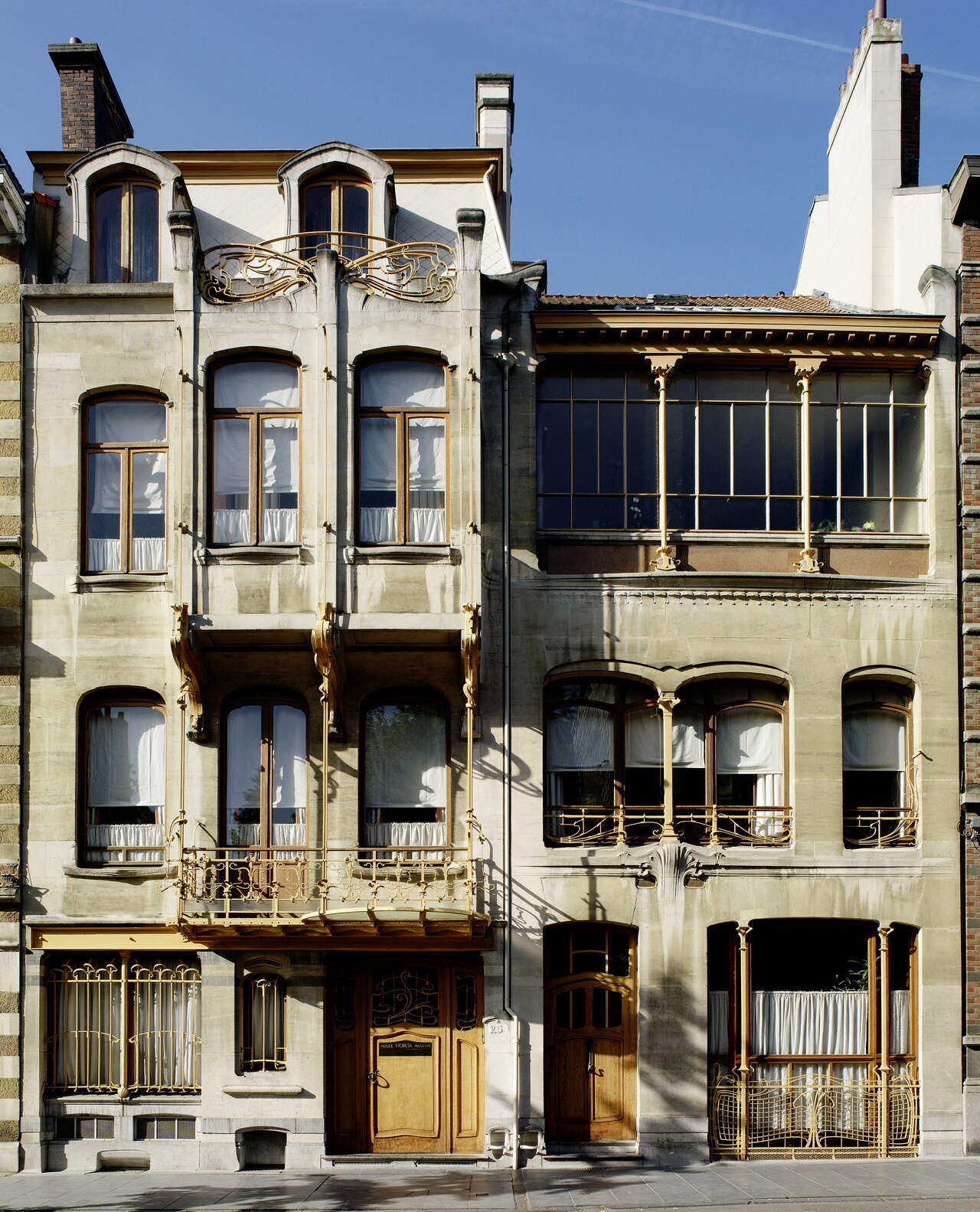
There followed the Hôtel van Eetvelde (1895), built for the administrator of the Congo Free State, and his own house and studio on the rue Américaine in Saint-Gilles (1898-1901), today the Horta Museum. These four buildings — Tassel, Solvay, van Eetvelde and the architect's own house — were inscribed on the UNESCO World Heritage List in 2000.
The Maison du Peuple
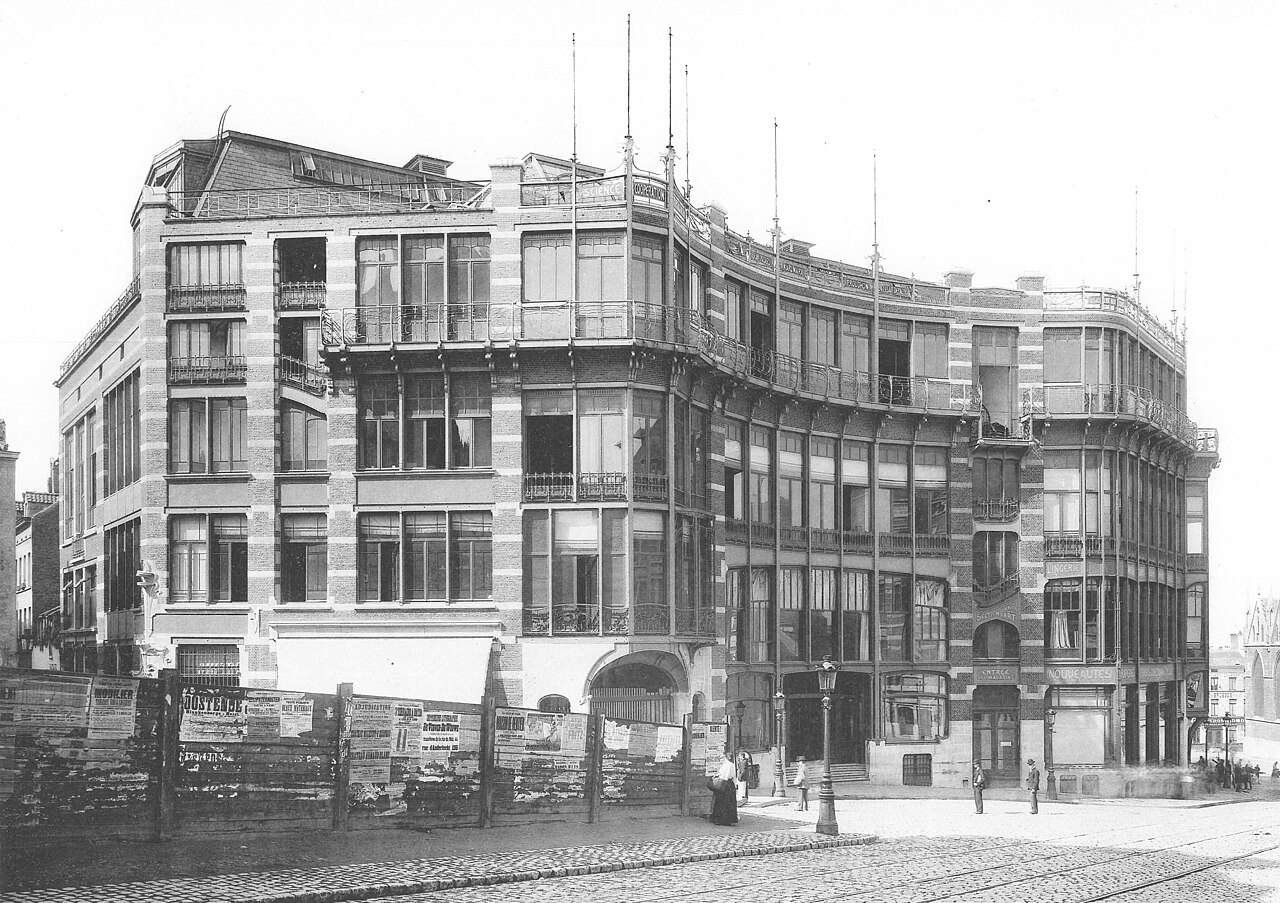
In 1896 the Belgian Workers' Party commissioned Horta to build its Maison du Peuple, completed in 1899. It was the architect's public masterpiece and the social manifesto of Art Nouveau: a vast building of iron, glass and brick, following a curved site, bringing together the party offices, cooperative shops, a café and an immense auditorium on the top floor. Its glass and metal façade was among the boldest of its day.
It was demolished in 1965. The destruction provoked an international outcry — architects and historians across the world signed petitions — and became one of the symbols of the struggle to preserve nineteenth-century heritage. The dismantled elements were dispersed; some were reused in the Horta metro station in Brussels and in a café in Antwerp. The À l'Innovation department store, another major work by Horta built in 1901 on the rue Neuve, had for its part been destroyed by fire in 1967.
The second Horta
The First World War marked a break. Horta left Belgium and remained in the United States until 1919. On his return, Art Nouveau had gone out of fashion, and the architect adopted an entirely different language: classical, austere, monumental.
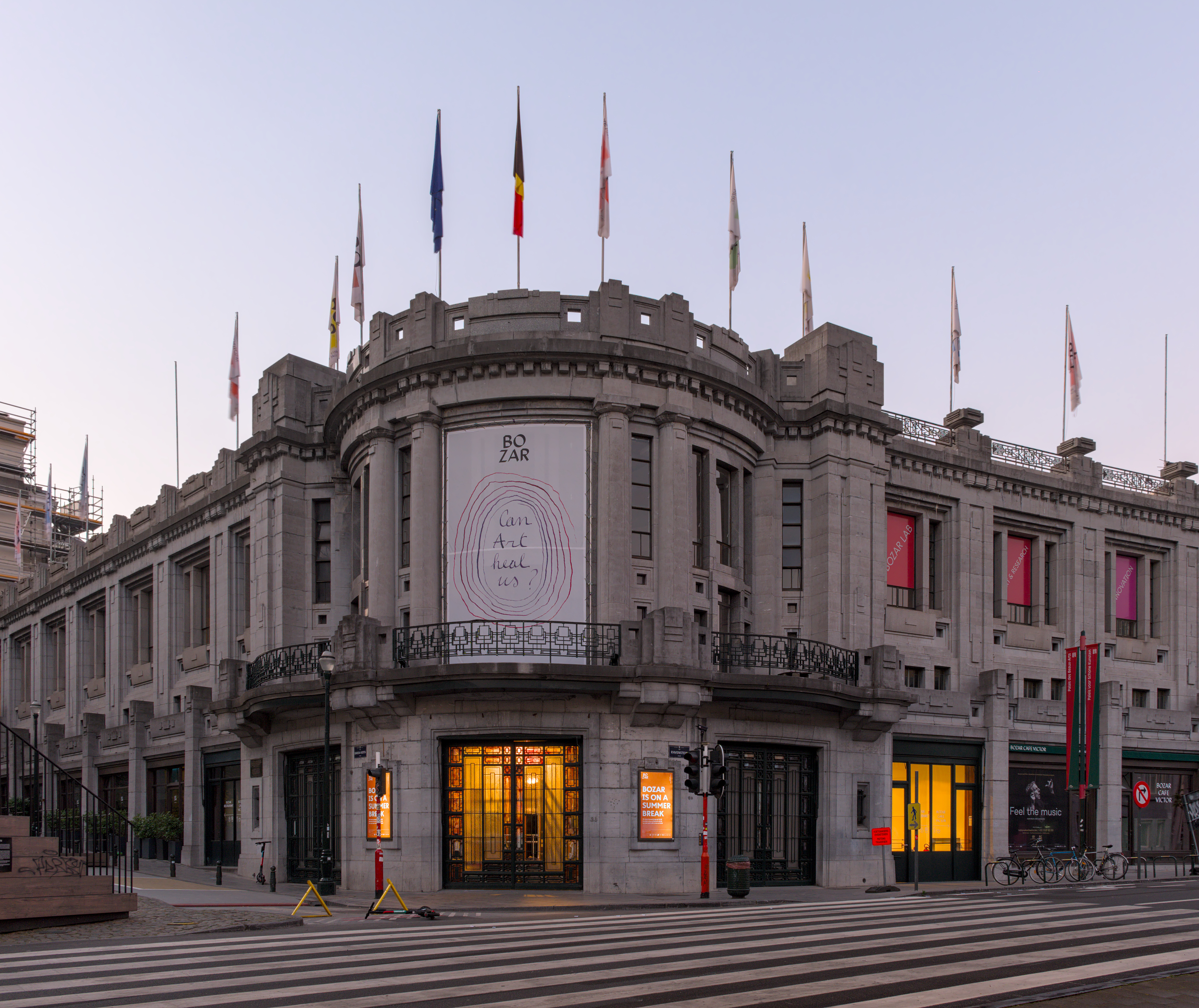
From this second manner date the Palais des Beaux-Arts in Brussels (1922-1929), today Bozar, a project of formidable complexity carried out on a steeply sloping site and under the obligation not to obstruct the view from the Royal Palace, and Brussels-Central station, designed from 1913 but completed only in 1952, five years after his death.
Horta was appointed director of the Académie royale des Beaux-Arts in Brussels, which he led from 1927 to 1931. In 1932, King Albert I created him a Baron for services to architecture. He died in Brussels on 8 September 1947, at the age of eighty-six, in relative indifference.
Legacy
Rehabilitation came late, driven in particular by the architect Jean Delhaye, a former collaborator of Horta, who campaigned from the late 1950s for the preservation of his work. The World Heritage inscription of 2000 confirmed that recognition.
Three of his buildings are open to the public in Brussels today: the Horta Museum, in the architect's house and studio; the Autrique House, one of his earliest works; and the former Waucquez stores, which house the Belgian Comic Strip Centre. Since 2013 the house and studio have enjoyed enhanced protection under the UNESCO convention for the protection of cultural property in the event of armed conflict.
Horta's influence on European Art Nouveau was decisive, from Hector Guimard, who saw the Hôtel Tassel before designing the Castel Béranger, to the architects of Vienna and Catalonia. His use of exposed iron and glazed façades also anticipates the architecture of the twentieth century.
See also
Art Nouveau — Hector Guimard — Louis Sorel — Metal architecture — Émile Gallé — Japonism — The 1900 Universal Exhibition
See our antique interiors and panelling
Bibliography
Writings by the architect
Victor HORTA, Mémoires, edited by Cécile Dulière, Brussels, Ministère de la Communauté française de Belgique, 1985.
Monographs
Michèle GOSLAR, Victor Horta (1861-1947). L'homme. L'architecte. L'Art Nouveau, Brussels, Fonds Mercator, 2012, 564 pp.
François LOYER, Victor Horta: Hôtel Tassel, 1893-1895, Brussels, 1998.
Anne HUSTACHE, Victor Horta: le Palais des Beaux-Arts de Bruxelles, Brussels, Crédit Communal, 1996.
Anne HUSTACHE, Victor Horta: maisons de campagne, Brussels, 1994.
Reference institutions
Horta Museum, Saint-Gilles, Brussels — the architect's house and studio, archives and collections.
UNESCO, World Heritage List — "Major Town Houses of the Architect Victor Horta (Brussels)", inscribed in 2000.