


Style Napoleon III / Ref.12052
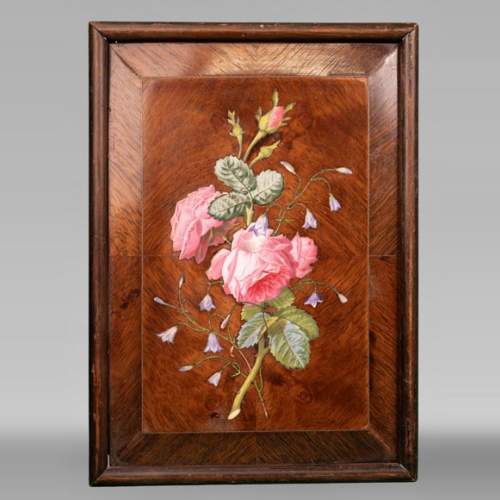
Julien-Nicolas RIVART, two porcelain marquetry panels on wood
Dimensions
Width: 47 cm / 18'' ½
Height: 56 cm / 22''
Depth: 6 cm / 2'' ⅜
Origin:
French
Julien-Nicolas Rivart (Paris, 1802-1867) is referred to in the archives as a porcelain gilder, a bronze manufacturer, or indeed a manufacturer of bronzes and porcelains. He is renowned for the patent he filed in 1849 for a technique of inlaying soft-paste porcelain into various materials, including wood, copper, marble and other stones.
A number of certificates of addition subsequently allowed him to employ, for this marquetry work, the entire range of French and English porcelains, and thereafter porcelains « of all kinds ». Rivart remained the only maker to have implemented this technique, even after the patent lapsed. His work was presented at several exhibitions and rewarded with numerous medals.
Our two plaques were executed using this patented technique. The process consists in moulding a soft-paste porcelain, fired a first time at a very high temperature, then levelled on the grinding wheel. Once glazed, the piece is fired a second time, then painted and heated to fix the colours. In the case of our pair, the porcelain elements were set into panels of blackened pear wood according to the classical procedures of marquetry. The background was then levelled using a paste.
This marquetry is remarkable for the fineness and acuity of the representation of the flowers in painted porcelain. The branches of roses and peonies display blossoms at different stages of flowering, while the multicoloured petals of this rare "flame" tulip variety are painted with extreme precision. One also perceives in the rendering of the leaves those that are full of life alongside those beginning to wither – an allusion to the inexorable passage of time. Rivart delivers here a work of exceptional refinement in the acuity of its naturalistic representation, comparable to the work of a botanist. Furthermore, the meticulous depiction of flowers reflects the development of horticulture in nineteenth-century Europe, a subject tirelessly explored by Zola in La Curée:
"And, beneath the trees, covering the ground, low ferns – the Adiantum, the Pteris – spread their delicate lacework, their fine tracery. Alsophila, of a taller species, tiered their rows of symmetrical, hexagonal fronds, so regular that they might have been great pieces of faience designed to hold the fruits of some gigantic dessert."
Informations
Price: on request
Recommended for you :

Dimensions:
Width: 40
Height: 58
Depth: 4
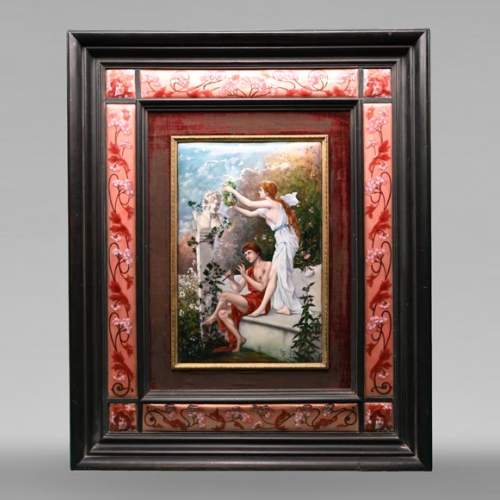
Dimensions:
Width: 48
Height: 58
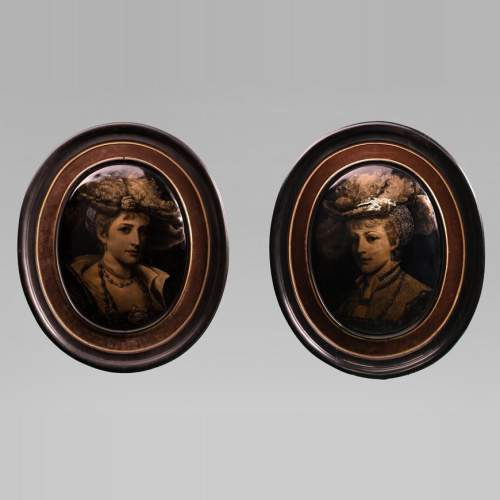
Dimensions:
Width: 56
Height: 69
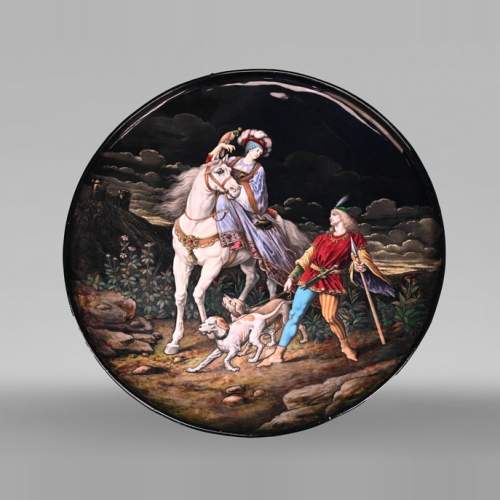
Dimensions:
Height: 3
Diameter: 41
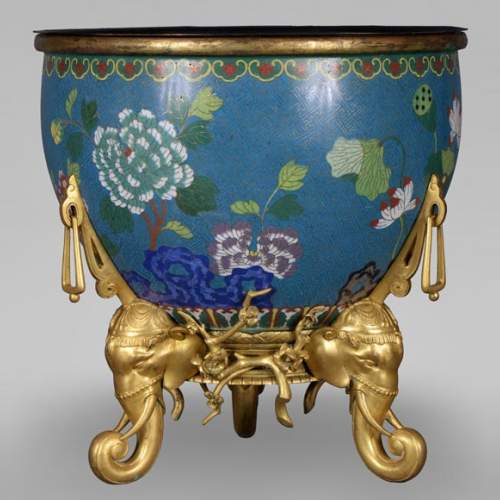
Dimensions:
Width: 32
Height: 32
Dimensions:
Height: 36

Dimensions:
Width: 27
Height: 36
Dimensions:
Width: 19
Height: 22
Depth: 6

Dimensions:
Width: 16
Height: 27
Depth: 11
Dimensions:
Width: 22
Height: 53
Depth: 19
Dimensions:
Width: 16
Height: 23
Depth: 17