


Style Napoleon III / Ref.12449
Eugène Piat (attr. to), Gilt-bronze wall light
Dimensions
Width: 33 cm / 13''
Height: 142 cm / 55'' ⅞
Depth: 90 cm / 35'' ⅜
Origin:
France, 19th century
Status:
Good condition.
This sumptuous gilt bronze wall lantern is attributed to Eugène Piat (1827-1903). The design, with its historicist references, complex and inventive, is typical of the ornemaniste. The acanthus leaves unfurl into a winged chimera forming both the lantern and a basket housing a modernised lighting system.
If there is one artist who grasped the full significance of industry applied to the arts, it is assuredly Eugène Piat. A leading figure in the nineteenth-century rapprochement between industry and the arts, Piat was among the co-founders in 1864 of the Union Centrale des Beaux-arts appliqués à l'Industrie, the forerunner of the Musée des Arts Décoratifs in Paris. Our wall lantern is representative of his work in that the artist applies the technical possibilities offered by industry to the bronze d'art. Piat collaborated with numerous trading houses, among them De Marnyhac, Lemerle-Charpentier, Maison Marchand and Mottheau, whose preferred clientele was the urban bourgeoisie. In 1889, the Jury of the Universal Exhibition observed: « Manufacturers owe him their greatest successes. »
The choice of gilt bronze and the prominence of ornamentation reflect the relative need felt by the nineteenth-century urban bourgeoisie to manifest its opulence. The historicist and eclectic aesthetic then in vogue particularly appealed to this rising bourgeoisie, eager to signal its command of historical references, which it wished to be at least equal to that of the nobility. Although the founder of our model is unknown today, the quality of the casting is excellent and allows for an attribution to the Maison Barbedienne. By skilfully employing vegetal elements in his composition, Eugène Piat confers upon this wall lantern an effect of continuous metamorphosis.
One of the chimera's legs rests on a lion-headed mascaron while the other is extended toward the basket; the lower part of its body transforms into foliage brushing against the winged bust, while from the unfurling volute forming the neck emerges a grotesque mask from which the imposing basket is suspended.
The design, of great virtuosity, skilfully blends volutes and rinceaux with the wings that form the main support of the sconce.
This work presents an association of styles characteristic of the ornemaniste's historicist production: a trefoil motif at the base of the basket (Gothic inspiration), a lion-muzzle mascaron (Renaissance), palmettes along the rim of the basket (Greek Antiquity), and the sinuous form of the chimera's body (evoking the Chinese dragons fashionable in France from the eighteenth century).
His numerous collaborations contributed to his international recognition. The 1889 Universal Exhibition was a resounding success for Piat, the only artist in Group III (furniture and accessories) to win a Grand Prix. The jury was effusive in its praise: « Mr Piat deserves it in every respect; for nearly forty years, he has been at the forefront of those industrial artists who ensure the pre-eminence of our art industries. Mr Piat is the creator of the most remarkable works to have appeared at the international exhibitions [...]. » At the end of his career, he donated his archives and his most important works to the Musée Saint-Loup in Troyes, thereby contributing to the creation of one of the first museums dedicated to the decorative arts in France.
Informations
Price: on request
Recommended for you :
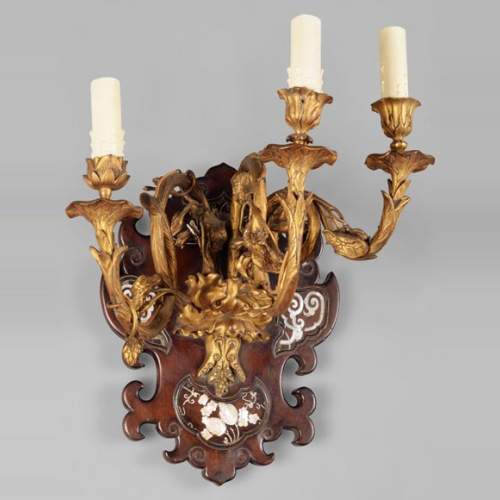
Dimensions:
Width: 26
Height: 40
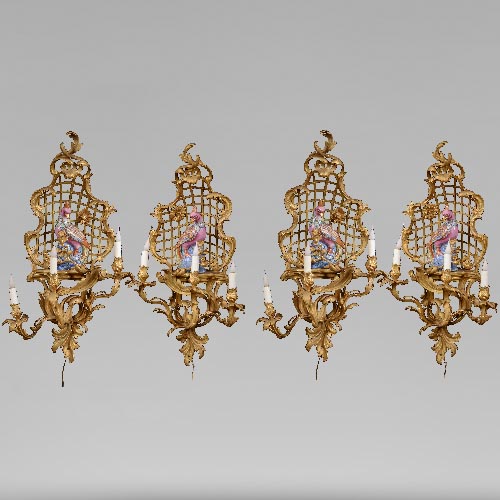
Dimensions:
Width: 56
Height: 97
Depth: 27
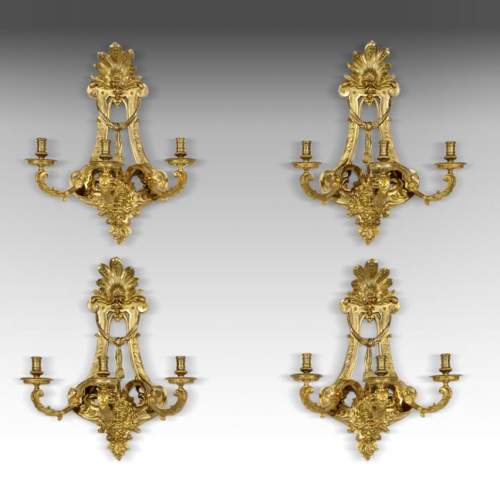
Dimensions:
Width: 54
Height: 66
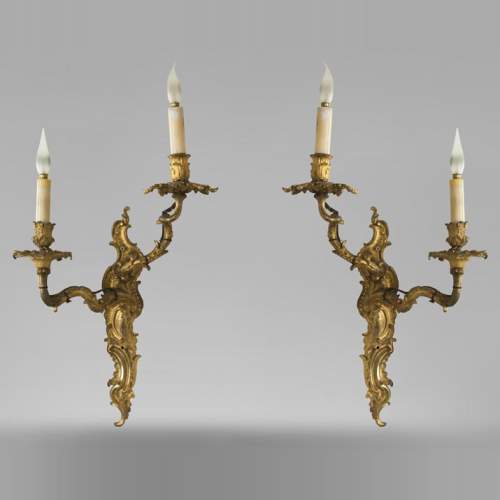
Dimensions:
Width: 32
Height: 60
Depth: 20
Dimensions:
Width: 67
Height: 56
Dimensions:
Width: 29
Height: 115
Depth: 90
Dimensions:
Height: 110
Diameter: 118
Dimensions:
Height: 95
Diameter: 55
Dimensions:
Height: 94
Diameter: 34
Dimensions:
Width: 65
Height: 106
Depth: 70
Dimensions:
Width: 47
Height: 78
Dimensions:
Height: 143
Diameter: 84