Eugène Viollet-le-Duc (1814-1879)
Download PDFEugène-Emmanuel Viollet-le-Duc, born in Paris on 27 January 1814 and died in Lausanne in 1879, is the most influential architect of monument restoration in the 19th century. Author of the Dictionnaire raisonné de l'architecture française, restorer of Notre-Dame de Paris, of Vézelay and of the city of Carcassonne, and builder of the Château de Pierrefonds, he imposed in France a vision of the Middle Ages that left its mark on architecture, the decorative arts and architectural theory well beyond his own time.
A training outside the institutions
The son of a senior civil servant in charge of the royal residences and nephew of the painter and critic Étienne-Jean Delécluze, Viollet-le-Duc grew up in a literary milieu. He refused to enter the École des Beaux-Arts and trained in the offices of Jacques-Marie Huvé and Achille Leclère, then by travelling through France and Italy (1831-1836), sketchbook in hand. This training made him an exceptional draughtsman and tied him to Romanticism and medieval architecture.
The great restorations
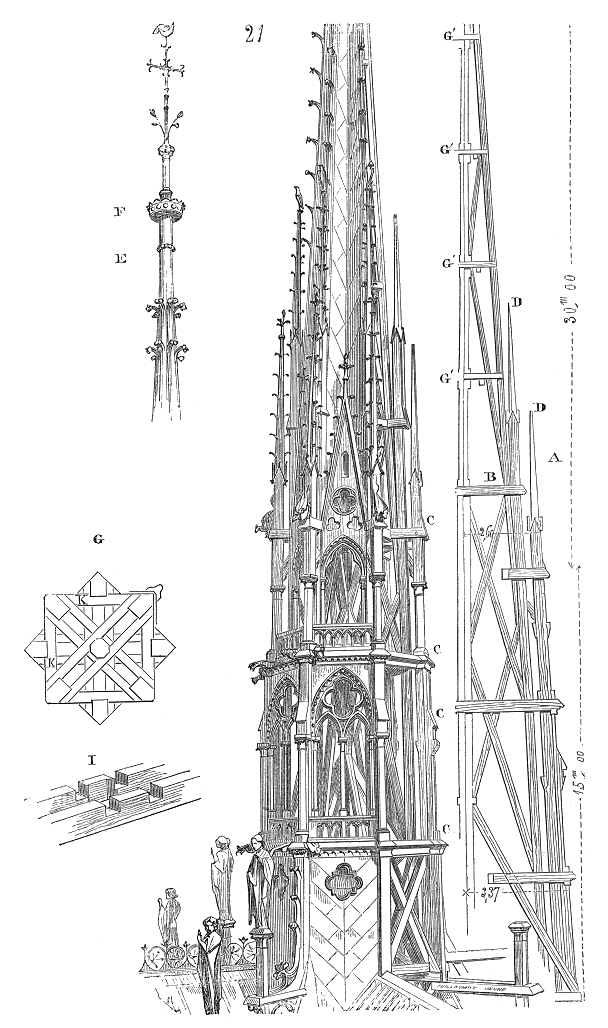
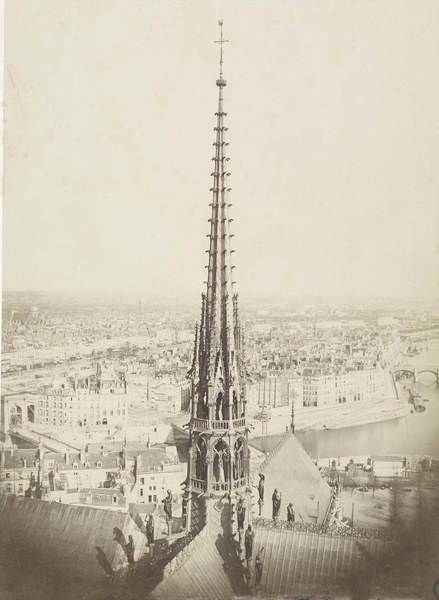
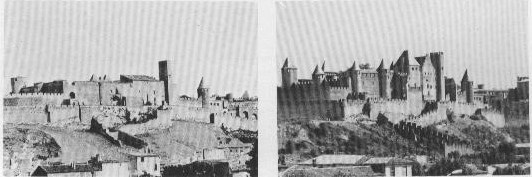
In 1840, on the proposal of Prosper Mérimée, the Commission des monuments historiques entrusted him, aged twenty-six, with the restoration of the basilica of Vézelay. Notre-Dame de Paris followed, restored from 1843-1844 with Jean-Baptiste Lassus, then alone after Lassus's death in 1857: he added a new spire of about ninety-three metres in 1859, to his designs, and recreated among other things the Gallery of Kings. He also worked at the Sainte-Chapelle, at Saint-Denis, at Amiens cathedral, on the ramparts of Carcassonne and, from the 1870s, at Lausanne cathedral.
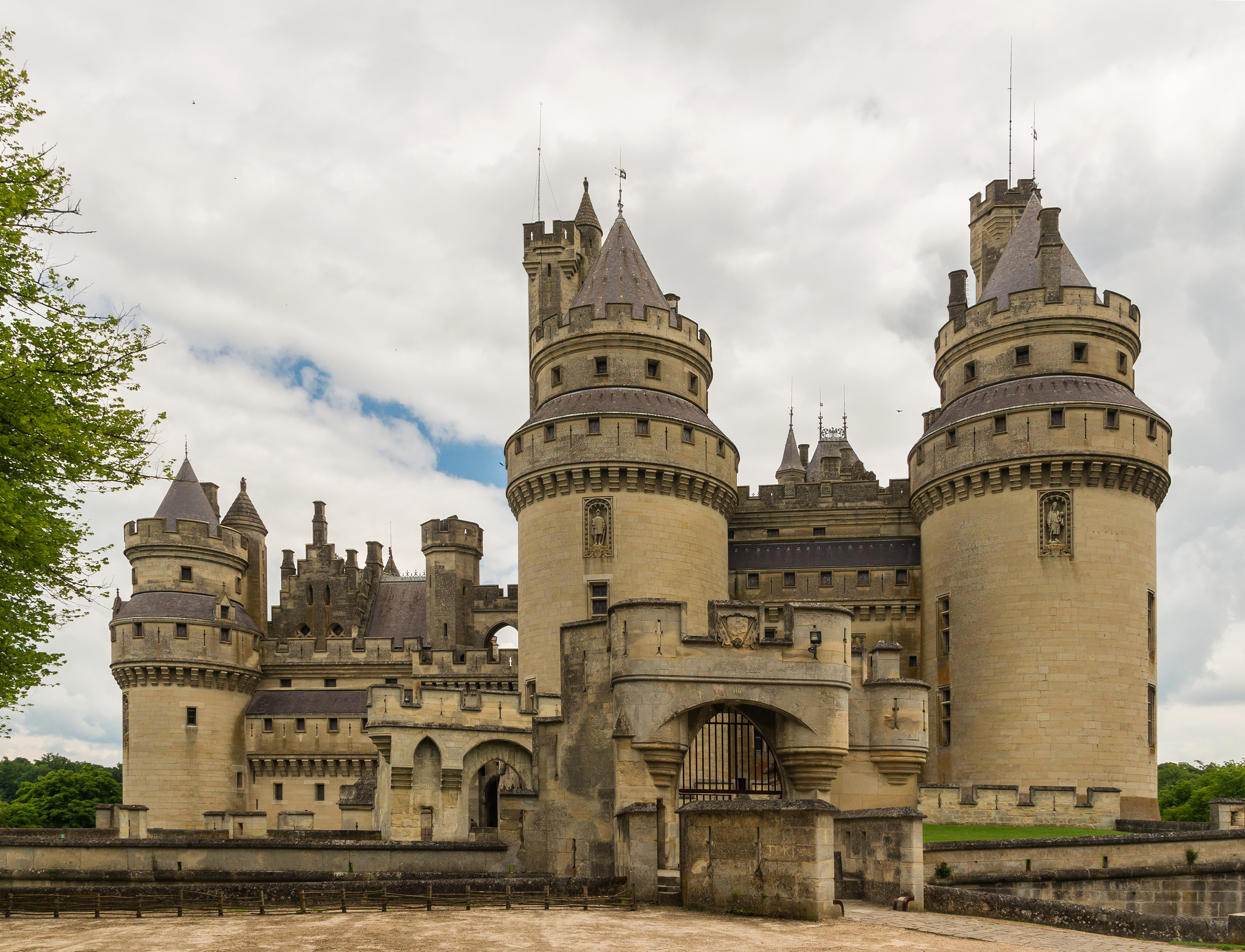
His great creation is the Château de Pierrefonds, commissioned by Napoleon III around 1857-1858: on the ruins of a fortress dismantled under Richelieu, he built a neo-medieval residence, down to the wall paintings, panelling and furniture. Prosper Mérimée praised its effect; Anatole France would mock an "enormous toy".
A controversial doctrine
In his Dictionnaire raisonné de l'architecture française du XIe au XVIe siècle (1854-1868) he defined restoration as re-establishing a building "in a complete state that may never have existed at any given moment". This idea of unity of style, which allowed lost parts to be completed or reinvented, founded the first French doctrine of historic monuments. It also drew sharp criticism, in France and in Britain, notably from John Ruskin. He also published the Entretiens sur l'architecture (1863-1872) and a Dictionnaire raisonné du mobilier français.
Draughtsman and designer of objects
Viollet-le-Duc was not confined to architecture: he designed furniture, liturgical objects and goldsmith's work for Notre-Dame, as well as painted decoration for Pierrefonds, drawing on medieval bestiaries and plant motifs. This vein fed the neo-Gothic taste of the Second Empire, found in the furniture and decorative arts of the second half of the 19th century.
Teaching and legacy
Appointed in 1863 professor of art history and aesthetics at the École des Beaux-Arts, he resigned in 1864 after a series of lectures and the failure of his attempt at reform. He was behind the Musée de Sculpture comparée, opened in 1882, now part of the Cité de l'architecture et du patrimoine. His pupils (Anatole de Baudot, Paul Gout, Édouard Corroyer, Denis Darcy) continued his work, and his rationalist thought inspired the Arts and Crafts movement and then Art Nouveau, from Guimard to Horta.
See also: Victor Horta — Hector Guimard — Art Nouveau — Napoleon III style
Bibliography
Institutional sources
French Ministry of Culture, Histoire des arts, thematic dossier "Un artiste en son temps : Eugène Viollet-le-Duc (1814-1879)" (chronology of restorations, teaching, Musée de sculpture comparée, decorative arts).
Bibliothèque nationale de France, Passerelles, "Viollet-le-Duc et la restauration" (restoration doctrine, Château de Pierrefonds); "Élévation et plans de la flèche de Notre-Dame de Paris par Viollet-le-Duc", drawing of 1866.
Académie de Versailles, Histoire des arts, "Fiche Viollet-le-Duc" (chronology, writings, pupils, legacy).
French Ministry of Education, Éduscol, "Découvrir Eugène Viollet-le-Duc à l'aide de ressources numériques".
Eugène Viollet-le-Duc, Dictionnaire raisonné de l'architecture française du XIe au XVIe siècle, Paris, 1854-1868; Entretiens sur l'architecture, Paris, 1863-1872.
Online resources
"Eugène Viollet-le-Duc", Wikipedia (English version).